
This “Arctic Fox” truck camper has a slide out! Wow, looks great!
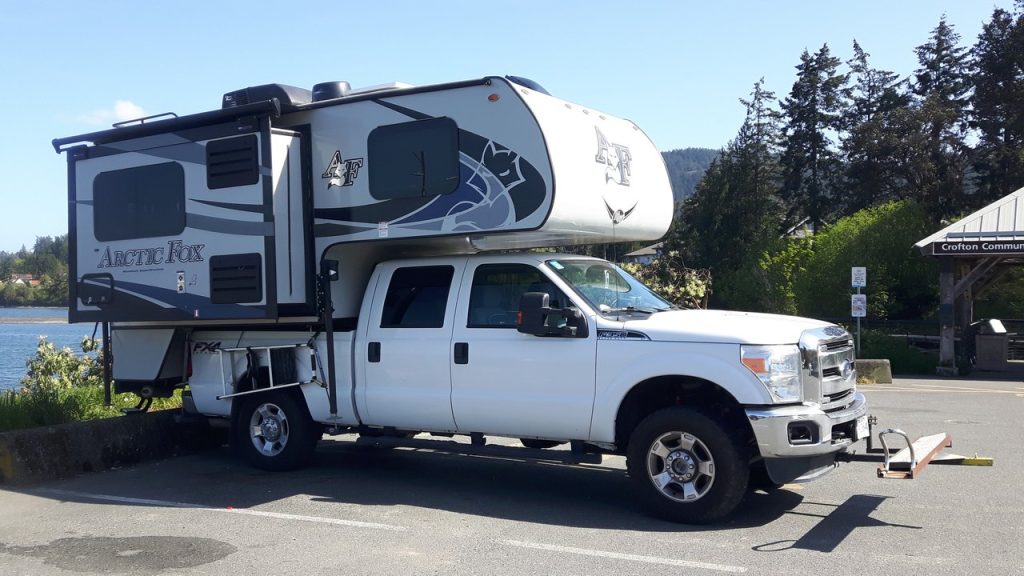
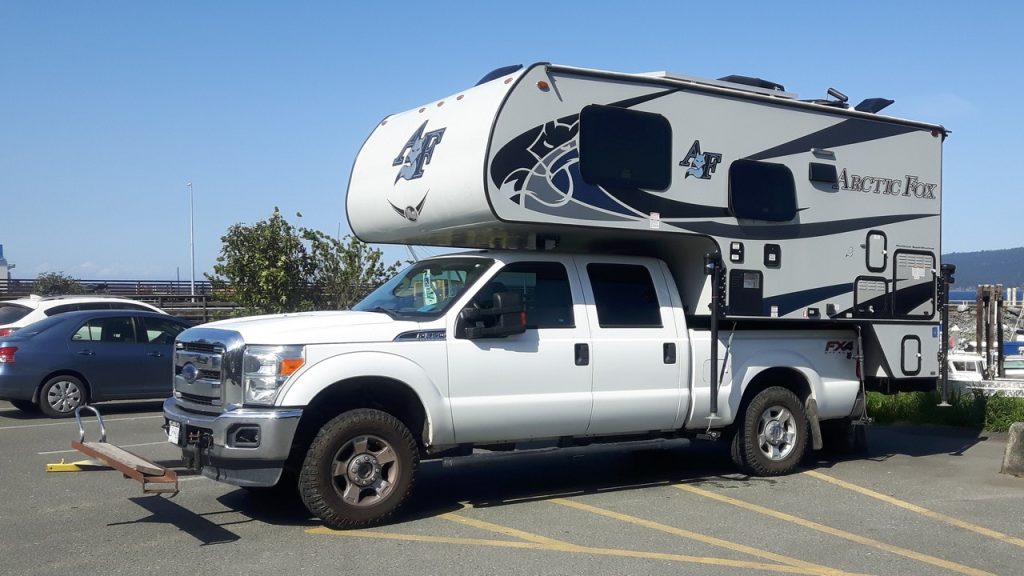
Arctic Fox truck campers, manufactured by Northwood Manufacturing in La Grande, Oregon, are known for their robust construction, four-season capability, and versatile floorplans. They’re designed for adventurers seeking off-grid camping with the convenience of a slide-in camper that fits in the bed of a pickup truck. Below is a detailed overview, including pros and cons, based on available information and user reviews.
Details of Arctic Fox Truck Campers
Overview:
- Manufacturer: Northwood Manufacturing, established in 1993, produces Arctic Fox truck campers alongside travel trailers, fifth wheels, and toy haulers.
- Models: The 2025 lineup includes models like the 811, 865, 990, 992, 1140, and 1150, with options for short-bed or long-bed trucks. Some models (e.g., 1150) offer wet or dry bath configurations.
- Construction: Built with a fully welded, thick-wall aluminum frame, one-piece fiberglass siding, and multi-layered substrate walls. They feature block foam insulation in walls, floors, and ceilings, making them true four-season campers. Roofs are walkable and crowned to shed water effectively.
- Weight: Dry weights range from approximately 2,641 to 3,605 pounds, but fully loaded weights can be significantly higher (e.g., Arctic Fox 990 estimated at 4,781–5,000 pounds wet). Actual weights often exceed listed dry weights by 500+ pounds due to mandatory packages and gear.
- Floorplans: Eight floorplans are available, with seven featuring a single slide-out and one (865) being non-slide. Slide-outs enhance interior space, and options include wet or dry baths, booth dinettes, and bunked sleeping areas.
- Standard Features:
- Electric rear awning, dual 30-pound propane tanks, roof rack, and ladder.
- 7 cu. ft. refrigerator, microwave, three-burner cooktop, and 6-gallon water heater.
- Heated and enclosed holding tanks for cold-weather camping.
- Solar prep (e.g., 170-watt solar panel on some models), generator readiness, and dual marine deep-cycle batteries.
- Interior: Features solid wood cabinetry, high-quality bedding, plush dinette cushions, and farmhouse-style aesthetics (e.g., white cabinetry, pale gray backsplash). Cathedral arch ceilings (introduced in 2017) add spaciousness.
- Capacities: Large holding tanks (e.g., Arctic Fox 811: 50-gallon fresh, 23-gallon black, 38-gallon gray) support extended boondocking. Some users suggest swapping black and gray tank sizes for better balance.
- Price: MSRP for 2025 models ranges around $49,793–$49,970 (e.g., 1150 wet/dry bath, 1140). Used units vary widely based on age and condition.
Specific Model Highlights:
- Arctic Fox 811: Hard-side, single-slide, short-bed camper for one-ton trucks. Spacious with large tanks, but its height and weight (over 3,200 pounds dry) can challenge single-rear-wheel (SRW) trucks.
- Arctic Fox 990: Long-bed, single-slide camper with a north-south bed orientation. Dry weight listed at 3,605 pounds, but wet weight can reach 5,000 pounds. Popular for its storage and comfort.
- Arctic Fox 865: Non-slide, wet bath model with a cathedral arch ceiling and panoramic rear window. Lighter (around 2,641 pounds dry), potentially suitable for SRW trucks, though a dually is recommended.
- Arctic Fox 1140/1150: Long-bed, single-slide models with wet or dry bath options. The 1150 dry bath offers ample kitchen counter space, ideal for cooking enthusiasts. MSRP around $49,970.
Pros of Arctic Fox Truck Campers
- Four-Season Capability:
- Fully insulated walls, floors, and roofs, plus heated holding tanks, make these campers suitable for extreme weather, from winter ski trips to summer desert camping.
- Users report staying warm in freezing temperatures and cool in summer heat.
- Robust Construction:
- Welded aluminum frame and fiberglass siding ensure durability for off-road travel. Walkable roofs and sturdy basement floor joists add to longevity.
- Owners praise the fit, finish, and residential-quality cabinetry, noting minimal issues over years of use.
- Spacious and Comfortable Interior:
- Slide-outs (except 865) create roomy living spaces. Cathedral arch ceilings enhance the sense of space.
- Thoughtful storage solutions, like pull-out pantries and dresser trunks, maximize utility. Farmhouse-style interiors appeal to those seeking a home-like feel.
- Off-Grid Capabilities:
- Solar panels, large battery banks, and generator readiness support extended boondocking. Large fresh and waste tanks (up to 50 gallons fresh) allow for 7+ days off-grid.
- Versatility:
- Compatible with short- or long-bed one-ton trucks (preferably dually). Models cater to various needs, from compact (865) to spacious (1140/1150).
- Ideal for towing boats or accessing remote areas where trailers can’t go.
- Strong Warranty and Reputation:
- Northwood’s robust warranty provides peace of mind. Arctic Fox is frequently recommended for its quality and value compared to competitors like Lance or Northern Lite.
Cons of Arctic Fox Truck Campers
- Heavy Weight:
- Listed dry weights are often misleading, with wet weights 500–2,000 pounds higher. For example, an Arctic Fox 811 weighed 13,870 pounds fully loaded, exceeding the truck’s 11,500-pound rating by 2,200 pounds.
- Most models require a one-ton dually truck (e.g., Ram 3500, Ford F-350) for safe handling, especially on windy or mountainous roads. SRW trucks may struggle with stability.
- High Center of Gravity:
- Tall profiles (up to 10 feet with truck) and heavy weight make campers top-heavy, causing swaying or rocking on uneven or steep roads. This can be unnerving for drivers, particularly with SRW trucks.
- Users report needing upgrades like sway bars, airbags, or dually trucks to mitigate instability.
- Not Ideal for Extreme Off-Roading:
- While durable, Arctic Fox campers are less suited for rough 4×4 roads compared to lighter models like Alaskan campers. Owners note challenges with leaning or bouncing on broken terrain.
- Minor Design Flaws:
- Some models lack convenient features, e.g., no good spot for a kitchen trash container (865) or awkwardly placed vanity mirrors in wet baths.
- Accessing propane tanks for refilling can be difficult, especially for shorter users, due to the camper’s height.
- Roof Maintenance Concerns:
- OEM rubber roofs (0.030 inches thick) may harden and become brittle over time, risking tears from branches. Some owners upgrade to thicker, lifetime-warranted roofs to address this.
- Cost and Payload Considerations:
- New models are pricey (around $50,000), and their weight demands trucks with high payload capacities (4,790–5,160 pounds for models like the 990). Overloading risks safety and insurance issues.
- Discontinued Models:
- Popular models like the 996 (double-slide) were discontinued around 2016, limiting options for buyers seeking specific layouts. Finding used units in good condition can be challenging.
Additional Considerations
- Truck Compatibility: Ensure your truck’s payload capacity matches the camper’s wet weight, including passengers and gear. A dually is strongly recommended for stability, especially for models like the 1140 or 1150. Check the truck’s yellow sticker on the driver’s door frame for payload info.
- Maintenance: Regular roof inspections and sealant checks are crucial to prevent water damage, a common issue with wood-framed campers. Some owners report delamination or mold in older units if not properly maintained.
- User Experiences: Owners generally love the quality and comfort but emphasize the need for a properly matched truck. Those who ventured off-road with insufficient setups (e.g., SRW trucks) faced stability issues, while dually owners report smooth handling.
Pros and Cons Summary
Pros:
- Four-season insulation and heated tanks for year-round camping.
- Durable aluminum frame and fiberglass construction.
- Spacious interiors with slide-outs and ample storage.
- Strong off-grid capabilities with solar and large tanks.
- High-quality materials and residential-style finishes.
- Reliable warranty and strong brand reputation.
Cons:
- Heavy, often requiring a dually truck, with misleading dry weight specs.
- Top-heavy design can cause swaying on rough or windy roads.
- Less suited for extreme off-roading compared to lighter campers.
- Minor design inconveniences (e.g., trash placement, propane access).
- OEM roof may need upgrading for long-term durability.
- High cost and payload demands limit accessibility.
Recommendation
Arctic Fox truck campers are an excellent choice for campers prioritizing comfort, durability, and four-season off-grid capability, particularly for boondocking or moderate off-road adventures. They’re best suited for those with one-ton dually trucks (e.g., Ram 3500, Ford F-350) to handle the weight and height safely. If you plan to tackle rough 4×4 trails or prefer a lighter setup, consider alternatives like Northern Lite or Alaskan campers.
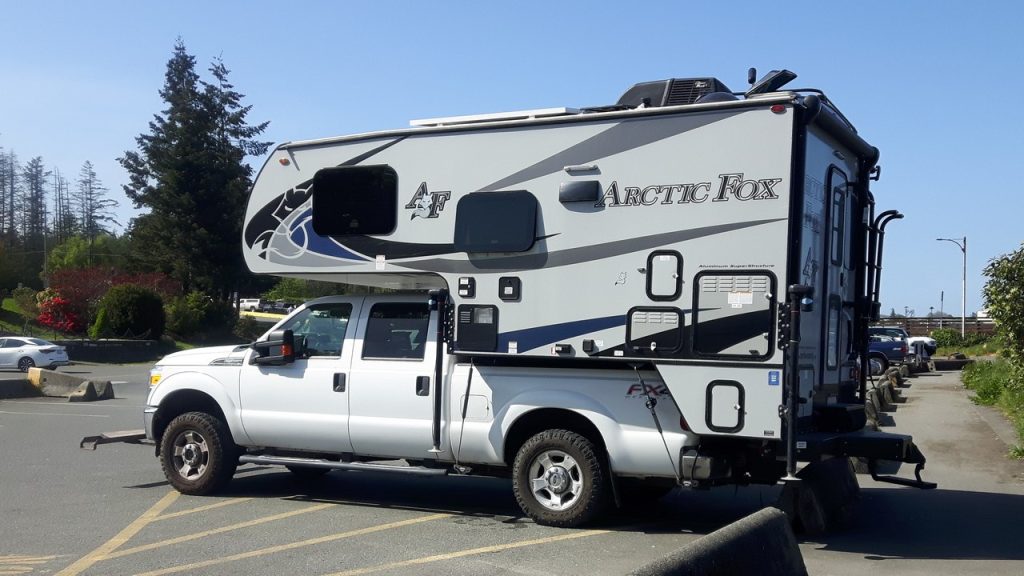
This camper mounted on a 4 door pick up truck really works! Have fun camping!