
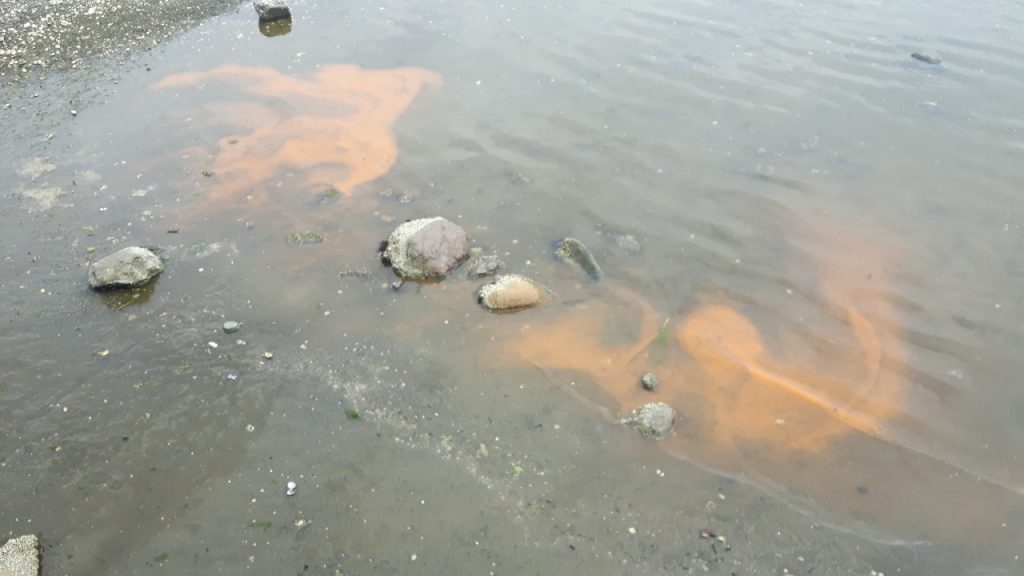
This is a “Very Small” bloom of Red Tide. This is very dangerous to Shellfish Harvesters.
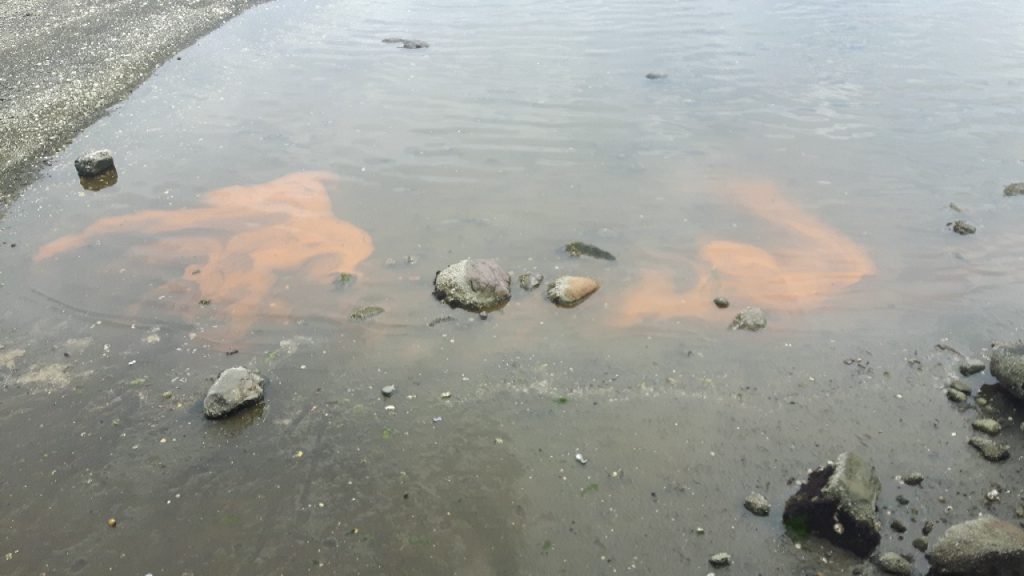
“Red tide” on the British Columbia (BC) coast refers to visible harmful algal blooms (HABs) that discolor seawater, often blood-red, dark orange, or brownish.
The term is most commonly applied locally to blooms of the microscopic dinoflagellate Noctiluca scintillans. This species is a natural part of marine plankton and frequently appears in BC coastal waters (e.g., around Vancouver Island, the Strait of Georgia, Gulf Islands, and areas like North Vancouver, Powell River, or Sechelt) from spring through fall, sometimes as early as May or even in winter.
These blooms are triggered by factors like warmer water temperatures, changes in salinity, nutrient upwelling, calm seas, and wind patterns—conditions that have become more favorable in some years due to climate trends. At night, Noctiluca can create a striking bioluminescent “sparkling sea” effect.
Not all red tides (or HABs) are the same, and the visible color does not always signal danger. Noctiluca scintillans itself does not produce the toxins responsible for paralytic shellfish poisoning (PSP) or other common shellfish illnesses. It is non-toxic to humans, and swimming in these blooms is generally considered safe (though some people avoid dense patches due to the appearance or potential for skin/eye irritation in very heavy blooms).
However, BC waters also experience other HABs from different algae (such as Alexandrium species, Heterosigma akashiwo, Pseudo-nitzschia, or Dinophysis). These can sometimes contribute to or coincide with red/discolored water and are the primary source of serious risks. Alexandrium in particular has been a concern in BC since at least the 1790s. hab.whoi.edu +1Dangers it posesThe main threats fall into two categories: direct effects on marine life and indirect risks to humans (primarily through shellfish).
- To marine life and ecosystems:
- Noctiluca blooms can harm fish in extreme cases by clogging gills (causing suffocation) or depleting oxygen levels as the algae die and decompose. cbc.ca
- Other HAB species (e.g., Heterosigma, Chaetoceros, Dictyocha) are more notorious for killing farmed salmon, wild fish, herring, or invertebrates through gill damage, toxins, or hypoxia. These events have caused significant aquaculture losses in BC and can affect broader food webs. frontiersin.org
- Some blooms have been linked to impacts on juvenile salmon or other wildlife.
- To human health (the biggest concern):
- Paralytic Shellfish Poisoning (PSP): Caused by saxitoxins from dinoflagellates like Alexandrium. Shellfish (clams, mussels, oysters, scallops, etc.) filter-feed on the algae and accumulate toxins in their tissues. The toxins are heat-stable—cooking, freezing, or steaming does not destroy them.
- Symptoms appear quickly (usually 30 minutes to 3 hours after eating contaminated shellfish): tingling/numbness starting around the lips and mouth and spreading to the face, neck, and extremities; dizziness; weakness; headache; nausea/vomiting; in severe cases, paralysis, difficulty breathing/swallowing, respiratory failure, and (rarely, with modern monitoring) death. bccdc.ca
- Other related illnesses include amnesic shellfish poisoning (ASP, from domoic acid—causing memory loss, confusion, seizures) and diarrhetic shellfish poisoning (DSP—gastrointestinal symptoms).
- PSP cases and investigations have increased in BC over recent decades, often linked to self-harvested (recreational or Indigenous) shellfish.
Shellfish from closed or unmonitored areas pose the highest risk. Contaminated shellfish look, smell, and taste normal.Monitoring and safetyFisheries and Oceans Canada (DFO), Environment Canada, and the Canadian Food Inspection Agency run the Canadian Shellfish Sanitation Program. They regularly test for biotoxins and close harvesting areas (commercial and recreational) when levels exceed safe limits (e.g., 80 μg saxitoxin per 100 g shellfish tissue). Closures are common and change frequently—always check the current DFO bivalve shellfish contamination map before harvesting.
Commercial shellfish sold in stores or restaurants are inspected and safe. Recreational harvesters should only take from open areas and stay informed via DFO updates. There is no reliable “visual” cue like water color to guarantee safety—toxin-producing algae are not always red.
Summary, the eye-catching red tides from Noctiluca on the BC coast are mostly a natural, visually dramatic phenomenon with limited direct human risk, but they highlight the broader presence of algal blooms that can make wild shellfish dangerous. Responsible monitoring keeps most incidents in check, but caution with self-harvested shellfish is essential. For the latest status, consult official DFO resources.
Stay safe harvesting!