
Jump to other Aviation Related Links
- See the main page on Air Tankers & Water Bombers right here ….. more
- See the main page on Airports & Base Camps right here ….. more
- See the main page on Aviation Museums right here ….. more
- See the main page on Aviation Training right here ….. more
- See the main page on Bush Planes right here ….. more
- See the main page on Cargo & Transport Aircraft right here ….. more
- See the main page on Helicopters right here ….. more
- See the main page on Military Aircraft right here ….. more
Boeing
Boeing is one of the world’s largest aerospace and defense manufacturers, founded in 1916 by William E. Boeing in Seattle, Washington. The company pioneered commercial jet travel with the 707 in the late 1950s and went on to produce iconic aircraft such as the 747 jumbo jet, as well as military platforms like the B-52 bomber and AH-64 Apache helicopter. It merged with McDonnell Douglas in 1997, significantly expanding its product lines.
Today, Boeing is best known for its commercial airplanes, particularly the 737 and 777 families, while also building spacecraft, satellites, and advanced defense systems. The company has faced significant challenges in recent years, including the 737 MAX grounding and production issues, but remains a key player in global aviation and a major U.S. exporter. Its headquarters are now in Arlington, Virginia.
Boeing 707

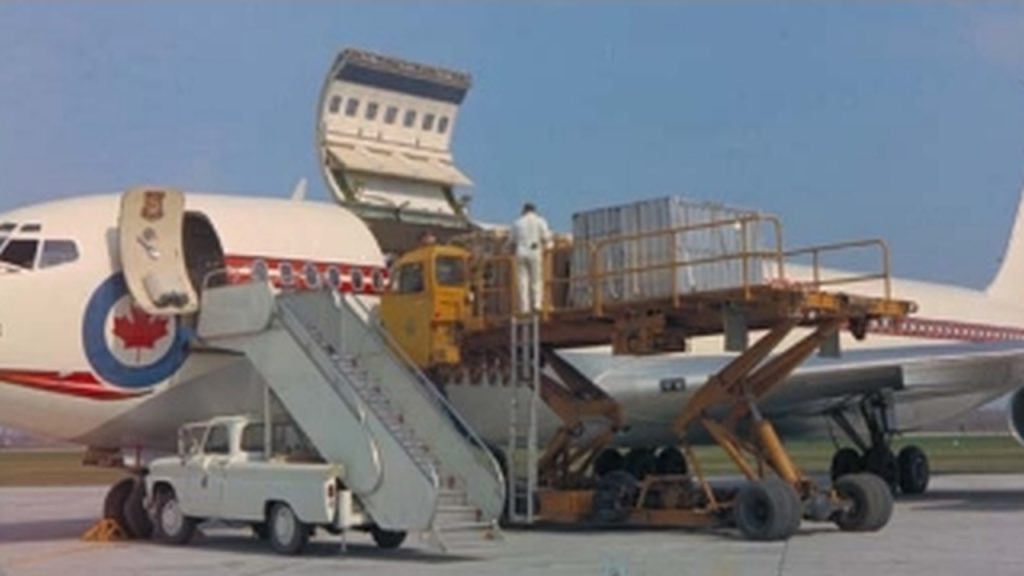
The Boeing 707 is a narrow-body, four-engine jet airliner that pioneered commercial jet travel, first flying in 1957 and entering service with Pan Am in 1958. It revolutionized long-haul air travel with its speed and range during the early Jet Age and remained in production until 1978 (with military derivatives continuing longer). The most capable variants are the longer-range 707-320 series.
- Crew/Capacity: Crew of 3–4 (typically 2 pilots + flight engineer, sometimes navigator); capacity up to 189–219 passengers in high-density configuration, typically 141–147 in two-class.
- Dimensions: Length 152 ft 11 in (46.61 m); wingspan 145 ft 9 in (44.42 m); height 42 ft 5 in (12.93 m).
- Weights: Empty weight ~148,000 lb (67,000 kg) range; max takeoff weight 328,000–333,600 lb (149,000–151,300 kg).
- Powerplant: 4 × Pratt & Whitney JT3D turbofan engines (most common on -320B), ~18,000 lbf (80 kN) thrust each.
- Performance: Max cruise speed ~607 mph (977 km/h / Mach 0.82–0.84); range up to ~5,750–6,160 nmi (10,650–11,410 km); service ceiling 36,000–41,000 ft.
Boeing 737
The Boeing 737 is a narrow-body, twin-engine jet airliner family that first flew in 1967 and has become the best-selling commercial jet in history, with thousands produced across Original, Classic, Next Generation (NG), and MAX variants.
One of my favourite aircraft BTW.

It is used primarily for short- to medium-haul flights and features a low-wing design with engines mounted under the wings. The most common current/ recent model is the 737-800 (NG).
- Performance: Max speed Mach 0.82 (~530 knots); cruise ~Mach 0.78–0.79; range ~3,115 nmi (5,765 km) for typical -800; service ceiling 41,000 ft (12,500 m).
- Crew/Capacity: Crew of 2 (pilots); typical capacity 162 passengers in two classes or up to 189 in single class (varies by variant and configuration).
- Dimensions: Length 129 ft 6 in (39.5 m) for -800; wingspan 117 ft 5 in (35.8 m) with winglets; height 41 ft 3 in (12.5 m).
- Weights: Empty/operating empty ~91,300 lb (41,413 kg) for -800; max takeoff weight up to 174,200 lb (79,016 kg).
- Powerplant: 2 × CFM International CFM56-7B turbofan engines (NG models; thrust ~26,000–27,300 lbf / 117–121 kN each); earlier models used Pratt & Whitney JT8D, later MAX uses LEAP-1B.
Curtiss Aircraft
Curtiss-Wright began developing the CW-20 in the late 1930s as a modern pressurized commercial airliner to compete with designs like the Boeing 307. The prototype first flew on March 26, 1940. With World War II underway, the U.S. Army Air Forces (USAAF) repurposed it as a military transport, designating it the C-46. Production ran from 1940 to 1945, with 3,181 aircraft built.
C-46 Commando
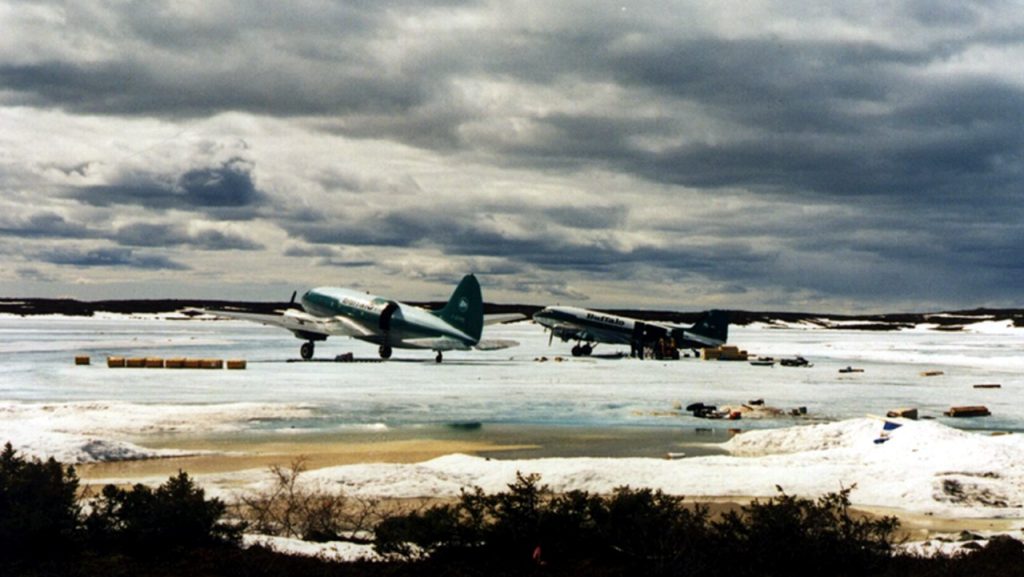
Here’s a particularly cool photo showing both the Curtis C-46 Commando & a DC-3
Common Specifications
- Performance: Cruise ~170–236 mph; max speed ~245–270 mph; range up to ~3,150 miles (ferry, lighter loads) or ~1,000–2,000 miles with heavy payload; service ceiling ~24,500–26,900 ft. Excellent heavy-lift capability for its size.
- Crew: 4 (typically pilot, co-pilot, flight engineer, radio operator/navigator).
- Capacity: Up to 40–50 troops; 30 stretcher patients; or ~15,000 lb (6,800 kg) cargo. Large cargo door and strong floor for heavy/bulky loads.
- Dimensions: Length 76 ft 4 in (23.27 m); wingspan 108 ft (32.92 m); height ~21 ft 9 in.
- Weights: Empty ~30,000–30,700 lb; gross ~45,000–48,000 lb.
- Powerplant: Two Pratt & Whitney R-2800 Double Wasp radial engines (details below).
Douglas aircraft
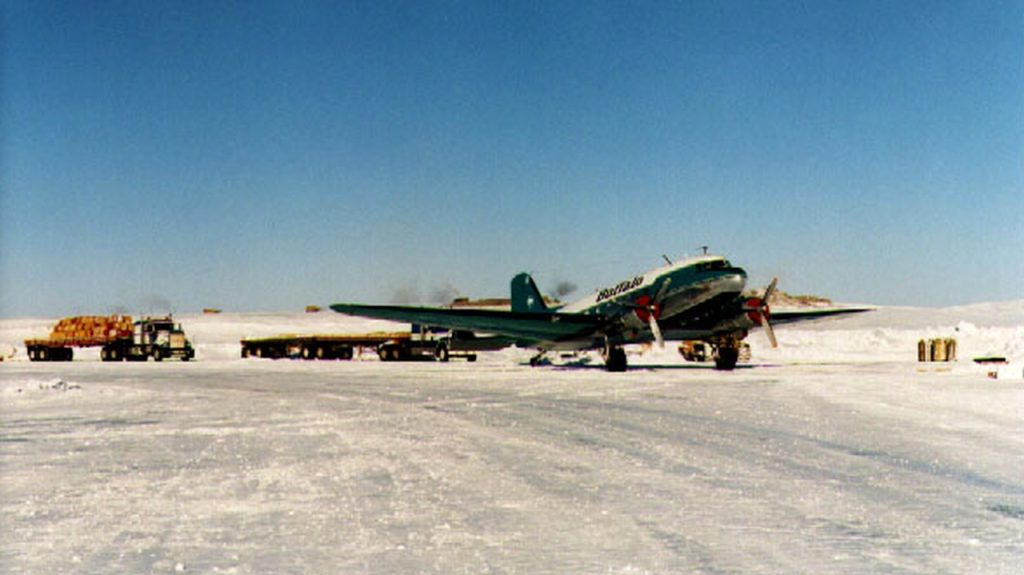
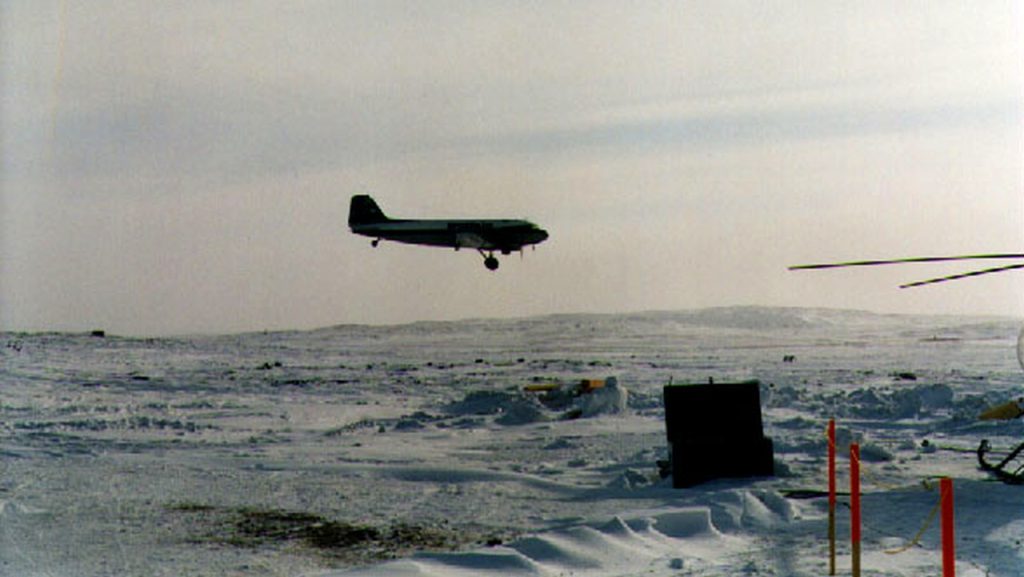
Production ran primarily from 1936 to 1942 (civilian) with military versions continuing. Over 600 civilian DC-3s were built, but wartime demand led to massive production of military variants (total ~16,000+ including license-built versions in the USSR and Japan). Post-WWII, thousands of surplus military aircraft flooded the civil market, dominating airlines into the 1950s and enabling global air transport growth. Many still fly today in cargo, passenger, sightseeing, and specialized roles.
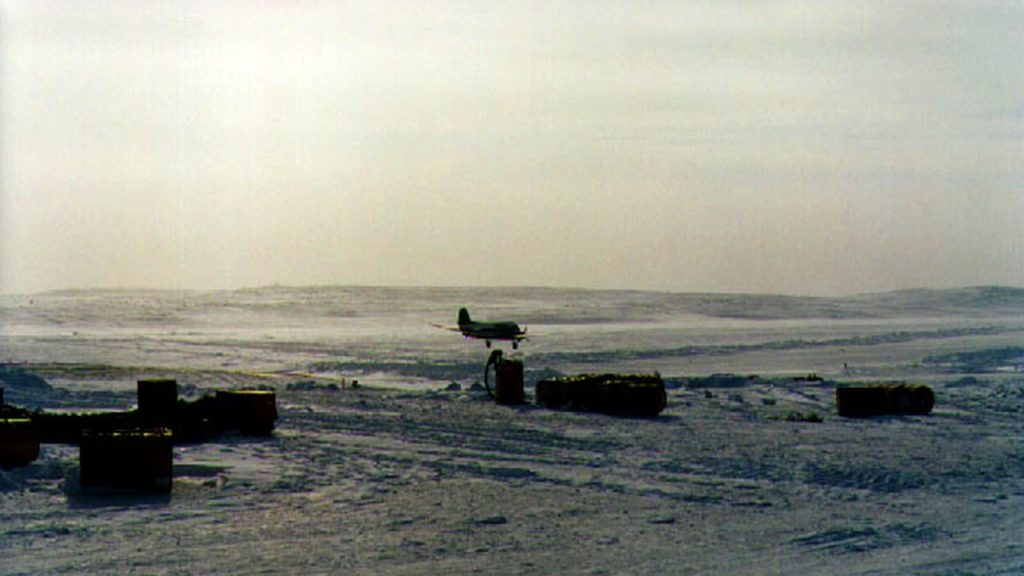
Douglas DC-3
- C-47 Skytrain: (USAAF primary transport) — Cargo/troop version with strengthened floor, large cargo door, and military avionics.
- C-53 Skytrooper: — Troop carrier variant.
- R4D: — US Navy/Marine Corps designation.
- Dakota: (RAF and other Allies) — Various marks (I, II, III, IV).
- Other variants: C-41 (early military), C-117 (Super DC-3 conversions), and specialized roles like glider tugs, paratroop drops, medevac, and electronic warfare.
Douglas DC-4
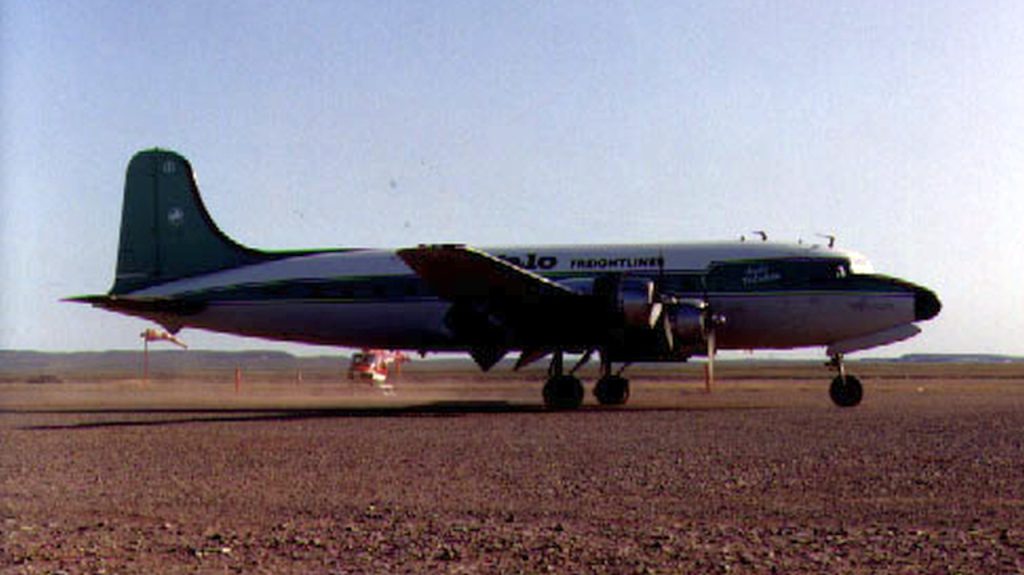
- Crew: 4 (pilot, co-pilot, flight engineer, radio operator/navigator).
- Capacity: 40–86 passengers depending on configuration (typically 44–60 in civil airliner setup); up to ~6–7 tons of cargo with large doors and reinforced floor.
- Dimensions: Length ~93–94 ft 10 in (28.6–29 m); wingspan ~117 ft 6 in (35.8 m); height ~27–28 ft.
- Weights: Empty ~38,000–45,000 lb; max takeoff ~73,000 lb (33,100 kg).
- Powerplant: Four radial piston engines (details below).
- Performance: Cruise ~200–227 mph; max speed ~280 mph; range ~2,000–3,700+ miles (varies with load/fuel); service ceiling ~22,000–24,000 ft. Good for its era but required longer runways than smaller bush types.
Jump to other Aviation Related Links
- See the main page on Air Tankers & Water Bombers right here ….. more
- See the main page on Airports & Base Camps right here ….. more
- See the main page on Aviation Museums right here ….. more
- See the main page on Aviation Training right here ….. more
- See the main page on Bush Planes right here ….. more
- See the main page on Cargo & Transport Aircraft right here ….. more
- See the main page on Helicopters right here ….. more
- See the main page on Military Aircraft right here ….. more
Cargo planes rock!