
Highlights from a recent beach walk to catch crabs by hand or by dip net!

The supplies are simple, a bucket, some gloves, a crab gauge, dip net, small pack and thigh waders (not pictured). We head down to the beach at one of the lowest tides of the year, and head for the waters edge as well as the eel grass which is where the crabs will be hiding.

I’m after Dungeness Crabs like this one or Red Rocks, but they have to be male, and they have to be alive. This one is a baby, far to small for harvest. Read about Dungeness Crabs below.
Dungeness Crab (Metacarcinus magister)
- Location: Found along the Pacific coast of North America, from Alaska’s Aleutian Islands to Point Conception, California. Common in areas like the Pacific Northwest, including Washington, Oregon, and British Columbia.
- Size: Adults typically measure 6-7 inches (15-18 cm) across the carapace (shell), with males being slightly larger than females. They can weigh up to 2 pounds (0.9 kg).
- Habitat: Prefer shallow coastal waters, estuaries, and bays with sandy or muddy bottoms. They thrive in depths from the intertidal zone to about 750 feet (230 meters), often in eelgrass beds or areas with structure for cover.
- Other Info:
- Diet: Omnivorous, feeding on fish, mollusks, worms, and plant matter. They’re also scavengers.
- Lifespan: Can live up to 8-13 years.
- Reproduction: Females carry eggs under their abdomen for several months before larvae hatch and go through planktonic stages.
- Commercial Importance: A major fishery species, especially in the Pacific Northwest, with a sweet, delicate flavor.
- Behavior: Known for molting (shedding their exoskeleton) as they grow, which can happen multiple times per year when young.
- Conservation: Regulated by size and sex restrictions (only males above a certain size can be harvested) to ensure sustainable populations.

The secondary target species and my personal favourite, is, Red Rock Crabs. They’re a bit smaller than the Dungeness but they taste sweeter! Read about them below!
Red Rock Crab (Cancer productus)
- Location: Found along the western coast of North America, from Kodiak Island, Alaska, to Isla San Martine, Baja California. Common in areas like Puget Sound, Washington, and northern California.
- Size: Males can reach up to 7.8 inches (20 cm) across the carapace, while females typically grow to about 6.2 inches (17 cm). Average sizes are smaller, with males around 7 inches and females around 5 inches.
- Habitat: Prefer rocky substrates, gravel, or kelp beds in shallow coastal waters, bays, and estuaries, from the mid-intertidal zone to depths of about 300 feet (90 meters). They avoid muddy or pure sand bottoms due to limited osmoregulation. Commonly found in high-salinity areas like Coos, Yaquina, and Tillamook bays in Oregon.
- Other Info:
- Appearance: Brick-red carapace with black-tipped claws, distinguishing them from Dungeness crabs, which lack black tips and have sharper carapace teeth. Juveniles may be white or have red and white stripes.
- Diet: Carnivorous, feeding on barnacles, mussels, clams, snails, smaller crabs, and occasionally algae or dead fish. Known for strong pincers that crush hard-shelled prey.
- Behavior: Aggressive and territorial, especially during mating season (May to August in some areas). Males guard females during molting for mating. They molt throughout life, with younger crabs molting multiple times annually.
- Reproduction: Mating occurs after females molt, with males carrying females to protect them. Females carry eggs for about three months before larvae hatch, developing through planktonic stages without parental care.
- Commercial and Recreational Use: Less meaty than Dungeness crabs, yielding mostly claw and leg meat with a sweet, delicate flavor. Harvested recreationally and in smaller commercial fisheries, especially in California (e.g., Morro Bay south). Minimum harvest size in British Columbia is 115 mm (4.5 inches).
- Predators: Preyed upon by rockfish, octopuses, sea otters, and large fish. Their hard shells and camouflage help protect them.
- Conservation: Sustainable practices include size limits (e.g., 5 inches in Washington) and restrictions on harvest of males only to maintain populations.

Some of the other creatures I spotted during the trip follow.
Kelp Crab (Pugettia producta)
- Location: In coastal British Columbia waters, Kelp Crabs are commonly found from the Alaska Panhandle south to Baja California, Mexico. They are prevalent in areas like the Strait of Georgia, Vancouver Island, and the Gulf Islands.
- Size: Adults typically have a carapace width of 3-4 inches (7.6-10 cm). Males are slightly larger than females, with carapace widths up to about 4.7 inches (12 cm) in some cases.
- Habitat: Prefer rocky intertidal zones and subtidal areas up to depths of about 240 feet (73 meters). They are strongly associated with kelp forests, particularly bull kelp (Nereocystis luetkeana) and other seaweed beds, where they climb and blend in for cover. Found in coastal waters with strong tidal currents and high salinity, such as those around Vancouver Island and the BC mainland coast.
- Other Info:
- Appearance: Smooth, rounded carapace with a glossy texture, typically olive-green to brownish, blending with kelp. Juveniles may be more reddish or mottled, transitioning to greener hues as they mature.
- Diet: Primarily herbivorous, feeding on kelp, algae, and seaweed. They use their sharp claws to scrape plant material but may occasionally consume small invertebrates or detritus.
- Behavior: Agile climbers, often seen clinging to kelp fronds or hiding in crevices. They molt frequently when young, less often as adults. Known for decorating themselves with bits of algae for camouflage.
- Reproduction: Mating occurs year-round, peaking in late spring to summer. Females carry eggs (up to 80,000) under their abdomen for several weeks until larvae hatch, developing through planktonic stages before settling as juveniles in kelp beds.
- Ecological Role: Play a role in controlling algae growth in kelp forests, contributing to ecosystem balance. Preyed upon by sea otters, fish (e.g., lingcod), and birds like gulls.
- Commercial/Recreational Use: Not a significant target for fisheries in BC due to their small size and low meat yield. Occasionally caught recreationally but not a primary species for harvest.
- Conservation: No specific conservation concerns in BC, as populations are stable. Kelp forest health, impacted by urchin overgrazing, indirectly affects their habitat.

Here’s a couple “Jelly Fish” that were waiting for the tide to come back in.


A small but nice and healthy looking “Sun Star”.

Giant “Moon Snails” are common on this beach as well, although this one was just an empty shell.


I got some! Within 45 minutes and only halfway to my “Turn Around Point” I managed a daily limit of Red Rock Crabs.

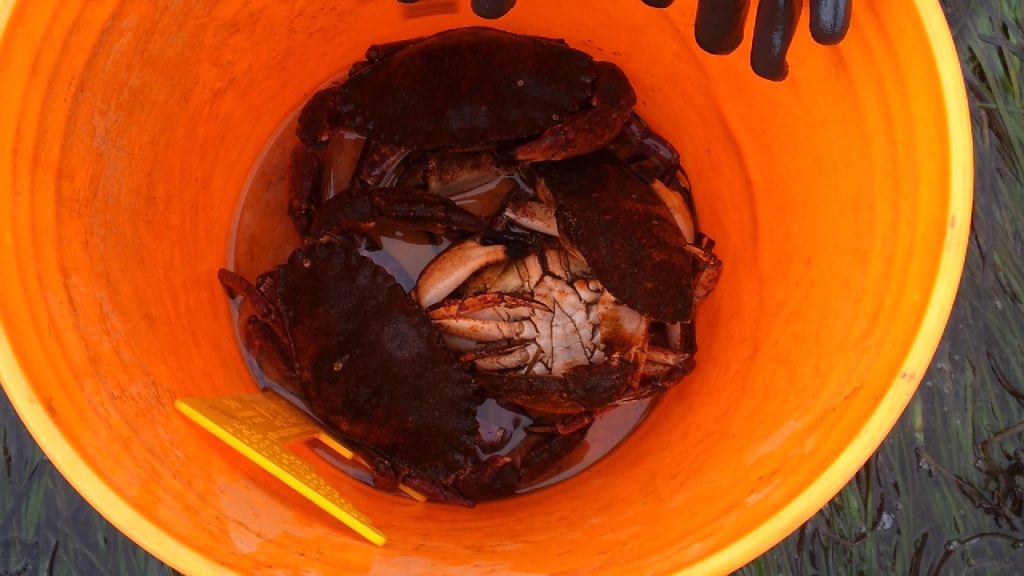

Day One: Catch ’em clean ’em & cook ’em.

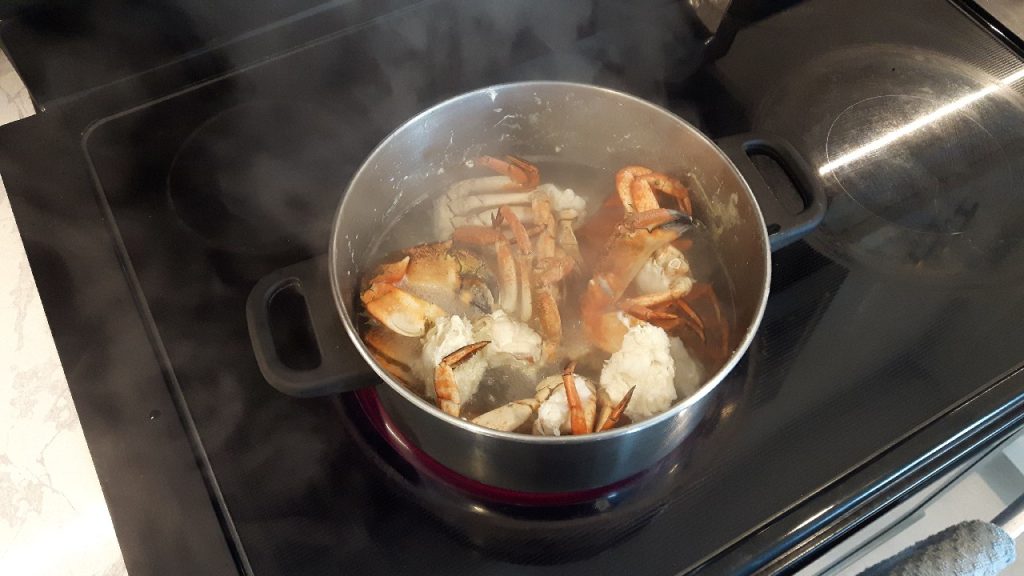


Day Two: Pick ’em & eat ’em or freeze ’em.


Happy Crabbing!