
The Hollies are a British rock/pop band formed in Manchester in 1962 by childhood friends Allan Clarke (lead vocals) and Graham Nash (vocals/guitar). They became one of the most successful groups of the British Invasion era, known for their bright, distinctive three-part harmonies (influenced by the Everly Brothers), ringing guitars, and catchy, hook-filled songs.
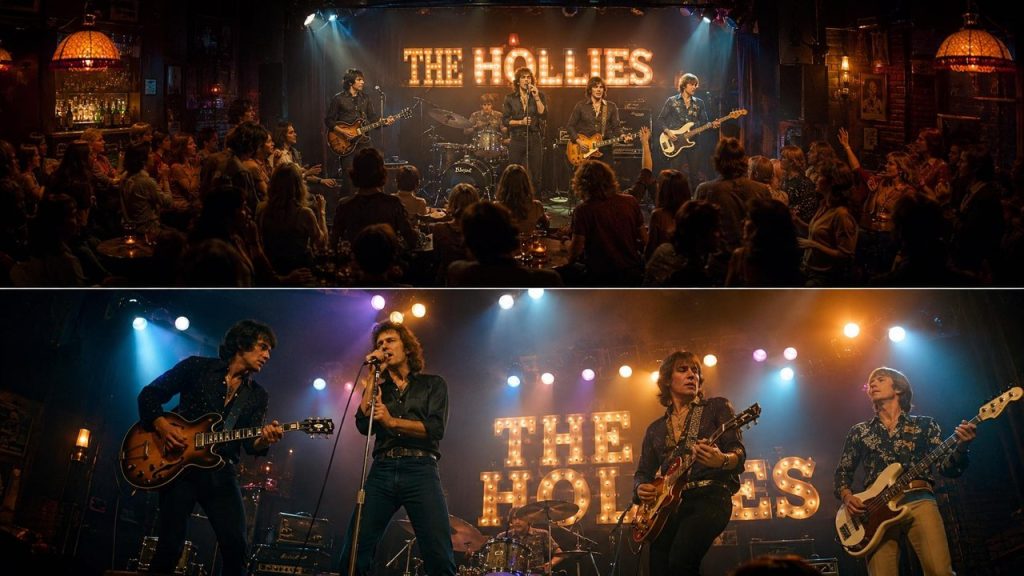
Core early members included Tony Hicks (lead guitar), Eric Haydock (bass; later replaced by Bernie Calvert), and Bobby Elliott (drums). They scored a long run of UK hits in the mid-1960s with covers and originals, then broke through bigger in the US with songs like “Bus Stop” (1966), “Stop Stop Stop,” “On a Carousel,” and “Carrie Anne.” Nash left at the end of 1968 to form Crosby, Stills & Nash and was replaced by Terry Sylvester. The band kept going strongly into the 1970s with hits including “He Ain’t Heavy, He’s My Brother” (1969) and “The Air That I Breathe” (1974). They were inducted into the Rock and Roll Hall of Fame in 2010.
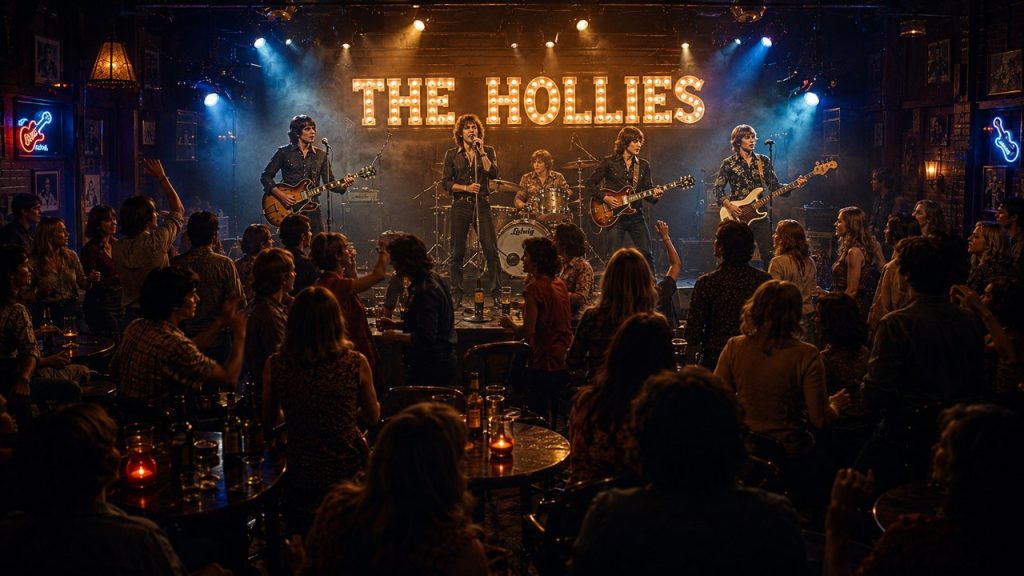
“Long Cool Woman (in a Black Dress)” (sometimes stylized with parentheses) is their biggest US hit. Written by Allan Clarke with Roger Cook and Roger Greenaway, it appeared on the 1971 album Distant Light and was released as a single in 1972. It reached No. 2 on the Billboard Hot 100 (held off the top by Gilbert O’Sullivan’s “Alone Again (Naturally)”), sold millions of copies (around 1.5 million in the US alone), and topped charts in places like South Africa and Canada, though it only hit No. 32 in the UK.
The song is a departure from the Hollies’ usual harmony-driven pop sound. It has a gritty, swamp-rock/Creedence Clearwater Revival-inspired feel (Clarke even channels a bit of John Fogerty’s vocal style), with Clarke on lead vocals and guitar and almost no group harmonies. The lyrics tell a film-noir-style story set in a Prohibition-era speakeasy: an undercover FBI agent is about to bust a nest of bootleggers when he spots a striking 5’9″ woman in a black dress singing. Chaos erupts with a raid, gunshots, and people diving for cover; he ends up choosing her over his duty.
Clarke co-wrote it around the time he was thinking about a solo career and temporarily left the band (replaced briefly by Mikael Rickfors). The song’s success helped prompt his return in 1973. It’s still one of their most-played and recognizable tracks.
Enjoy!