
A butane torch makes great toast! And FAST!
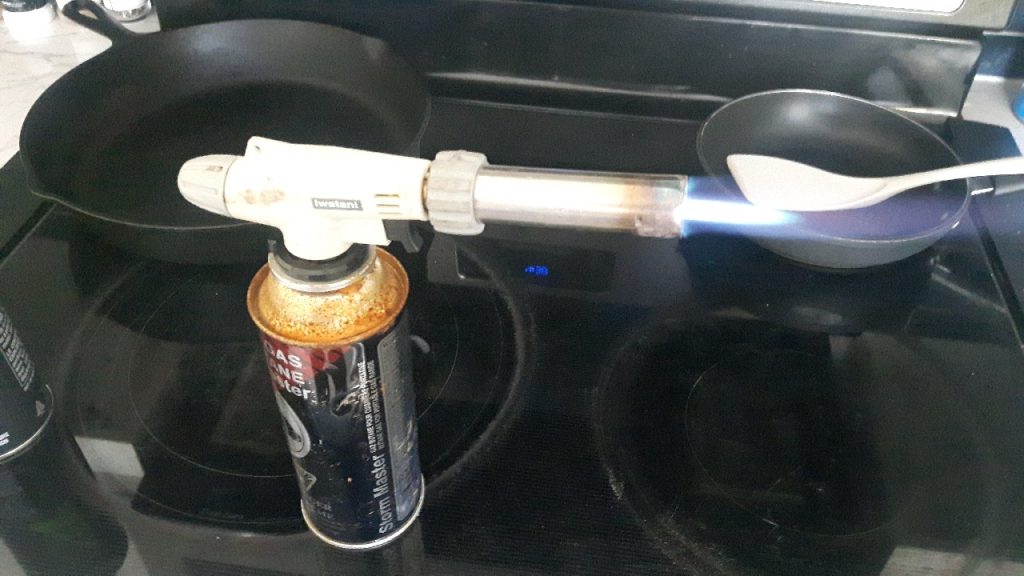
Butane costs about $4.00 – $5.00 a can depending on how much you get at once.
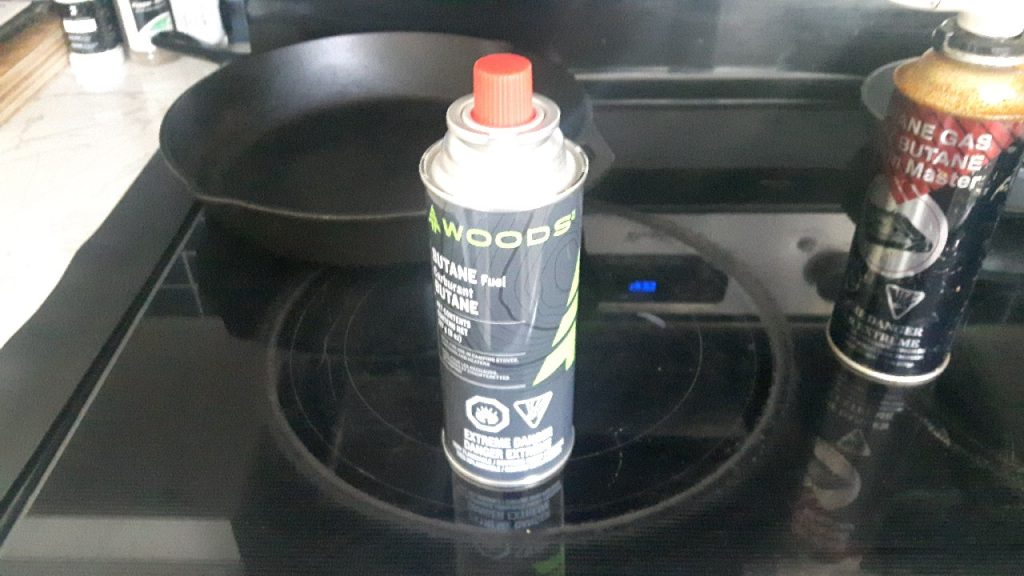
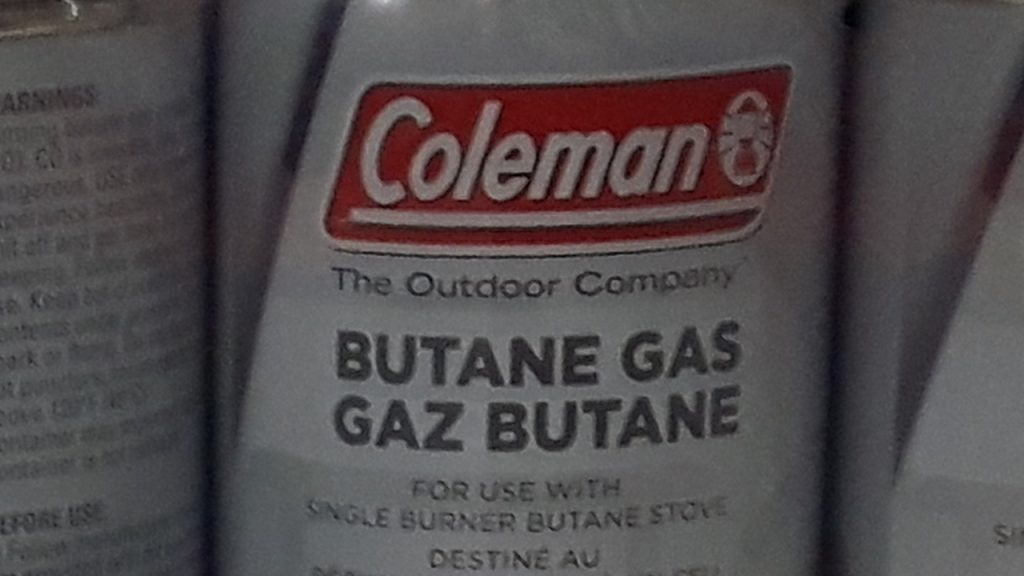
Butane gas is commonly used in cooking applications, such as portable stoves, camping burners, and lighters, due to its portability, ease of use, and clean-burning properties.
Butane Gas for Cooking
Characteristics:
- Chemical Composition: Butane (C4H10) is a flammable hydrocarbon gas stored as a liquid under pressure in canisters.
- Burning Properties: Burns cleanly with a high heat output, producing carbon dioxide and water vapor when combusted completely. Incomplete combustion can produce carbon monoxide, requiring good ventilation.
- Storage: Stored in lightweight, pressurized canisters (e.g., 8 oz or 220 g canisters for portable stoves).
- Boiling Point: -0.5°C (31.1°F), meaning it turns from liquid to gas at this temperature. It performs poorly in cold environments below this point unless mixed with other fuels like isobutane or propane.
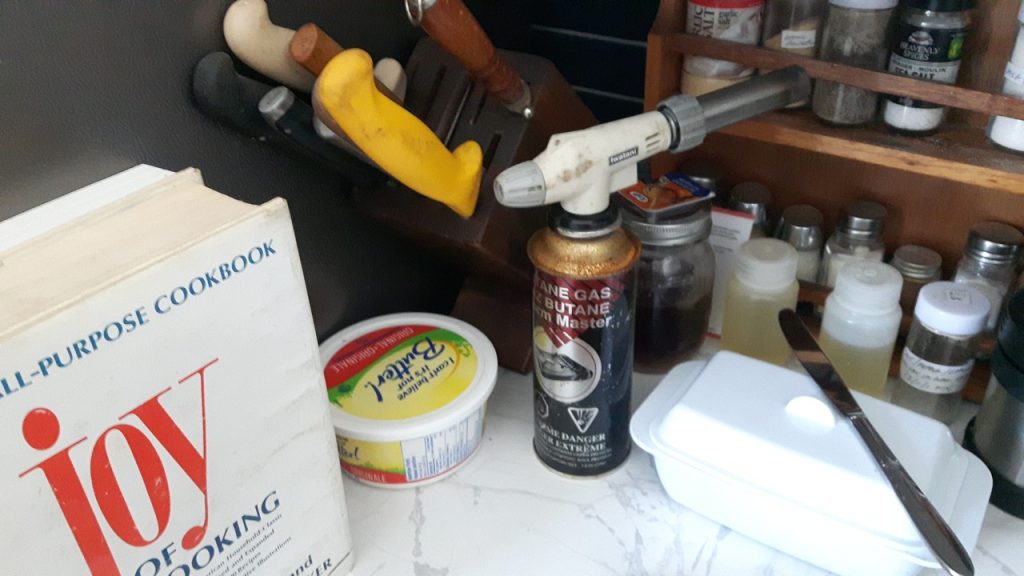
Operating Specifications:
- Heat Output: Approximately 7,000–10,000 BTU/hour (British Thermal Units) for typical portable butane stoves, depending on burner size and design.
- Pressure: Stored at 30–40 psi at room temperature (70°F/21°C). Pressure decreases in colder conditions, reducing performance.
- Burn Time: An 8 oz (220 g) canister typically lasts 1–3 hours on a single-burner stove at medium to high output.
- Ignition: Often used with piezo-electric ignition systems in modern portable stoves for easy lighting.
- Temperature Sensitivity: Best used in temperatures above 32°F (0°C). Below this, vaporization slows, reducing flame strength unless a cold-weather blend (e.g., butane/isobutane/propane mix) is used.
- Safety: Canisters are designed with safety valves to prevent over-pressurization. Must be stored away from heat sources to avoid explosion risks.
Applications:
- Portable Cooking: Used in single-burner stoves for camping, picnics, or home use (e.g., hot pot cooking).
- Catering and Food Stalls: Lightweight canisters are ideal for mobile setups.
- Torches: Culinary torches for browning or caramelizing (e.g., crème brûlée).
Comparison to Liquid Fuel and Propane
1. Liquid Fuel (e.g., White Gas, Kerosene)
Liquid fuels, such as white gas (refined gasoline) or kerosene, are used in multi-fuel camping stoves like those from MSR or Coleman.
- Heat Output:
- Butane: 7,000–10,000 BTU/hour, consistent but slightly lower than liquid fuels.
- Liquid Fuel: 8,000–12,000 BTU/hour, depending on the stove and fuel type. White gas burns hotter than butane, making it better for high-altitude or heavy-duty cooking.
- Temperature Performance:
- Butane: Poor in sub-freezing temperatures due to its high boiling point (-0.5°C). Cold-weather blends improve this slightly.
- Liquid Fuel: Excellent in cold weather (boiling points much lower, e.g., -40°C for white gas). Stoves can be pressurized manually with a pump, ensuring consistent performance.
- Ease of Use:
- Butane: Simple to use—canisters are pre-pressurized, lightweight, and require no priming or pumping. Canisters are disposable or recyclable.
- Liquid Fuel: Requires priming (pre-heating the burner), manual pressurization, and refilling fuel bottles, which is more complex and messy. Spills are a risk.
- Portability:
- Butane: Highly portable due to compact, sealed canisters. No risk of spills.
- Liquid Fuel: Less portable due to heavier stoves and the need to carry liquid fuel bottles, which can leak if not sealed properly.
- Availability:
- Butane: Widely available in standardized canisters (e.g., 8 oz) at camping stores, supermarkets, or online.
- Liquid Fuel: Less common; white gas is available at outdoor retailers, but kerosene may be harder to find in some regions.
- Cost:
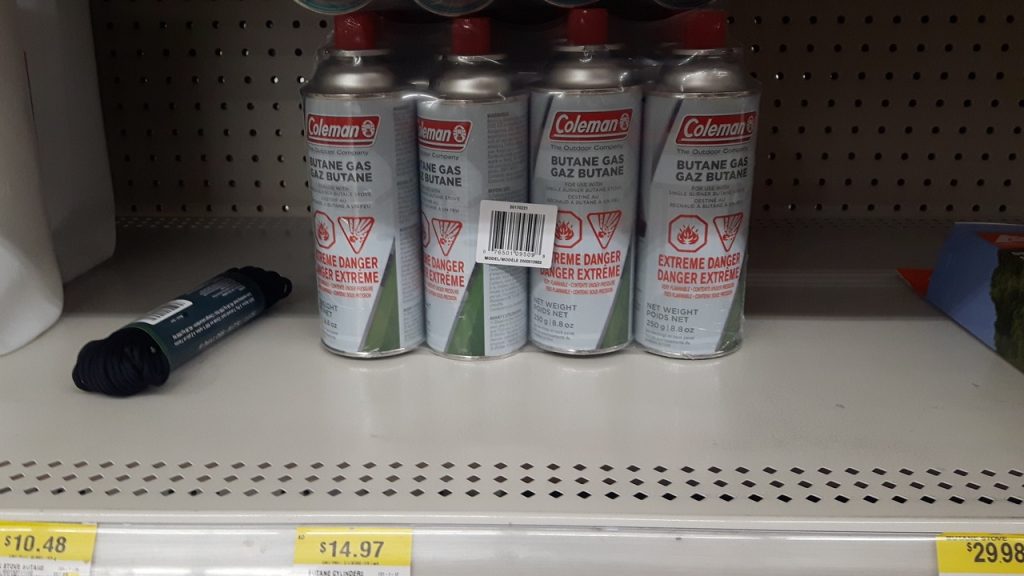
- Butane: Canisters cost $2–$6 for 8 oz, depending on brand and region. Convenient but more expensive per unit of energy.
- Liquid Fuel: White gas or kerosene is cheaper per liter ($10–$20/gallon), and stoves can be refueled, making it more cost-effective for long-term use.
- Safety:
- Butane: Safer for casual use due to sealed canisters, but improper storage or puncturing can cause leaks or explosions.
- Liquid Fuel: Higher risk due to flammable liquid spills and the need for priming, which involves open flames. Requires careful handling.
- Environmental Impact:
- Butane: Disposable canisters create waste, though some are recyclable. Burns cleaner than kerosene.
- Liquid Fuel: Refillable fuel bottles reduce waste, but kerosene burns dirtier, producing more soot and emissions.
2. Propane
Propane (C3H8) is another hydrocarbon gas, commonly used in larger camping stoves, grills, and RV cooking setups.
- Heat Output:
- Butane: 7,000–10,000 BTU/hour, slightly less than propane.
- Propane: 8,000–12,000 BTU/hour for similar-sized burners. Propane has a slightly higher energy content (21,500 BTU/lb vs. 20,800 BTU/lb for butane).
- Temperature Performance:
- Butane: Struggles below 32°F (0°C) due to its higher boiling point.
- Propane: Performs well in cold weather (boiling point: -42°C/-44°F), making it ideal for winter camping or high-altitude use.
- Ease of Use:
- Butane: Canisters are smaller and easier to connect to portable stoves. No need for regulators in most cases.
- Propane: Often stored in larger tanks (e.g., 1 lb or 20 lb), requiring regulators or adapters for small stoves. Bulkier for solo or minimalist camping.
- Portability:
- Butane: More compact and lighter (8 oz canisters vs. 1 lb propane tanks). Ideal for backpacking.
- Propane: Heavier and bulkier, better suited for car camping or RV use. Small 1 lb cylinders are available but less common for ultralight setups.
- Availability:
- Butane: Widely available in small canisters, especially in urban areas and camping stores.
- Propane: More common in larger tanks for grills or RVs, but 1 lb cylinders are available at hardware or outdoor stores.
- Cost:
- Butane: $2–$6 per 8 oz canister, slightly more expensive per unit of energy.
- Propane: $3–$5 for a 1 lb cylinder, or cheaper for larger tanks (e.g., $20 for 20 lb, refillable). More cost-effective for frequent use.
- Safety:
- Butane: Safer for indoor use (e.g., portable stoves in well-ventilated areas) due to lower pressure and smaller canisters.
- Propane: Higher pressure (100–150 psi at room temperature) requires careful handling. Not recommended for indoor use unless with proper ventilation and equipment.
- Environmental Impact:
- Butane: Disposable canisters create waste, though recyclable in some areas.
- Propane: Refillable tanks reduce waste, and burns slightly cleaner than butane in terms of emissions.
Summary Table
| Feature | Butane | Liquid Fuel (White Gas/Kerosene) | Propane |
|---|---|---|---|
| Heat Output | 7,000–10,000 BTU/hr | 8,000–12,000 BTU/hr | 8,000–12,000 BTU/hr |
| Cold Weather | Poor (<32°F) | Excellent | Excellent |
| Ease of Use | Very easy (no priming) | Complex (priming, pumping) | Moderate (regulators needed) |
| Portability | High (light canisters) | Moderate (heavier stoves) | Moderate (bulkier tanks) |
| Availability | High (small canisters) | Moderate (specialty stores) | High (tanks/cylinders) |
| Cost | $2–$6/8 oz | $10–$20/gallon | $3–$5/1 lb, cheaper for tanks |
| Safety | Safe (sealed canisters) | Riskier (spills, priming) | Moderate (higher pressure) |
| Environmental | Disposable canisters | Refillable, but dirtier burn | Refillable, cleaner burn |
When to Choose Each:
- Butane: Best for casual camping, backpacking, or indoor cooking (e.g., hot pot) in mild weather. Ideal for simplicity and portability.
- Liquid Fuel: Best for extreme conditions (cold, high altitude) or long expeditions where fuel efficiency and refillability matter.
- Propane: Best for car camping, RV use, or group cooking where higher heat output and cold-weather performance are needed.
Always ensure proper ventilation when using any fuel for cooking to avoid carbon monoxide buildup. Check local regulations for fuel transport and disposal, especially for butane and propane canisters.
Happy Cooking, remember that torches make great toast! haha