
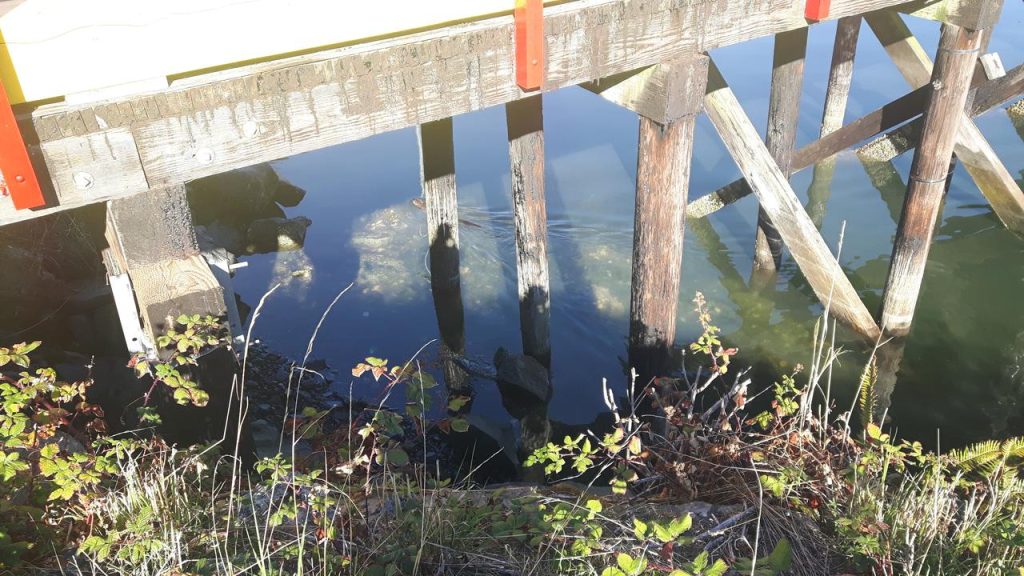
North American river otters (Lontra canadensis) are a familiar and adaptable presence along the southeast coast of Vancouver Island, regularly seen in places like Esquimalt Harbour, Oak Bay, Victoria shorelines, Saanich waters, and nearby docks or estuaries. These sleek, dark-brown mammals thrive in both freshwater and coastal marine habitats, often foraging near shore and hauling out on rocks, logs, or docks.
- Typically 1–1.4 metres long and 5–14 kg, with a long tapered tail and webbed feet suited for swimming
- Frequently mistaken for the larger, fluffier sea otters (which are far less common in southern waters)
- Diet centres on fish—especially intertidal and subtidal species such as sculpins, gunnels, and pricklebacks—plus crabs and other small aquatic prey
- Often travel and forage in family groups; dens are usually on land near water, including under docks or in shoreline burrows
- Populations remain healthy and secure in the region despite localized contaminant concerns in urban harbours
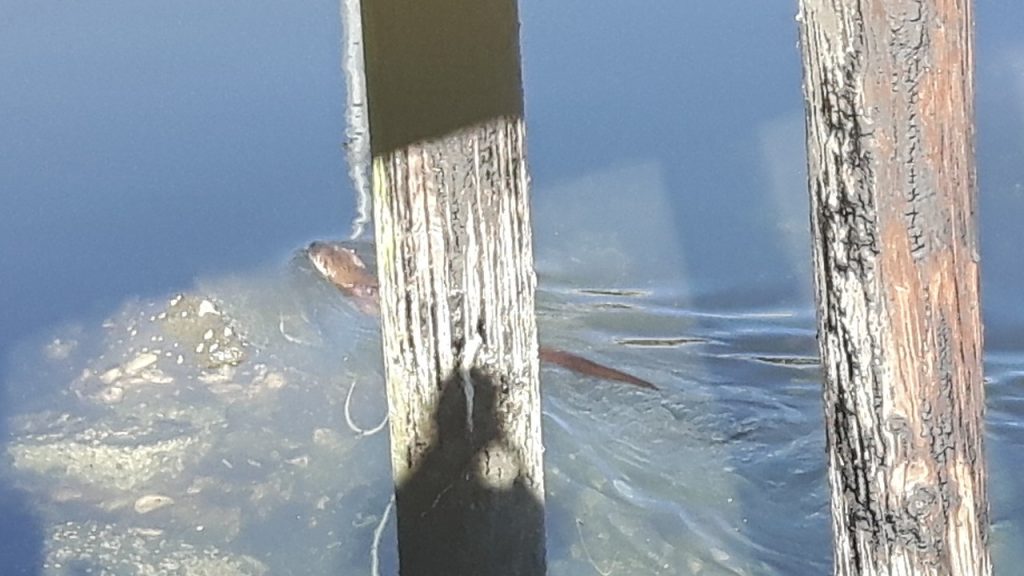
River otters add lively character to the southeast coast’s waterways and are a welcome sight for many residents and visitors. Their ability to live alongside human activity, from busy harbours to quieter beaches, highlights their resilience in this part of Vancouver Island.
They’ll shit all over your boat if you leave it on the dock for any length of time!