
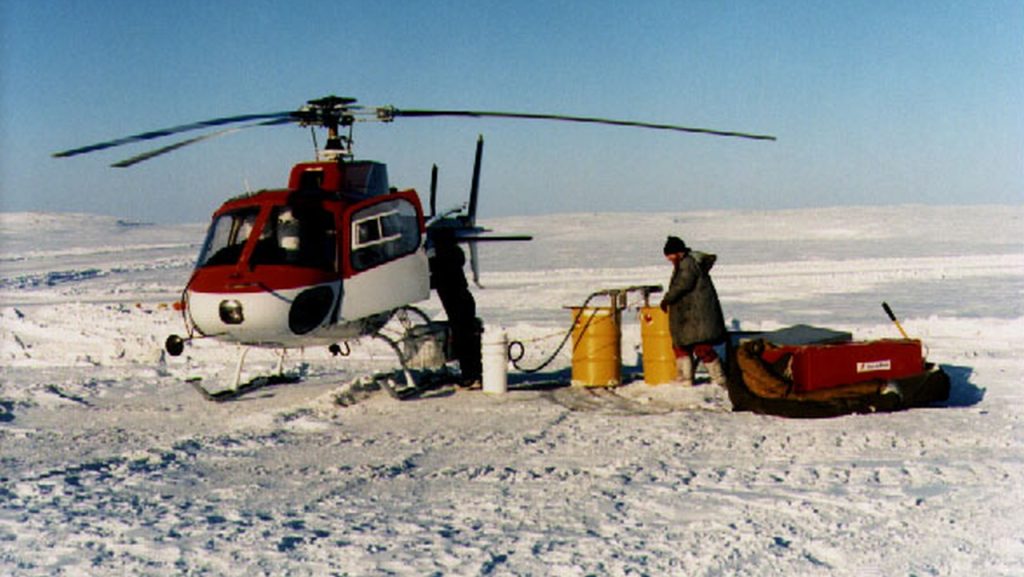
The Aerospatiale AS350 Écureuil (Squirrel), now known as the Airbus Helicopters H125, is a highly successful single-engine light utility helicopter. It features a Starflex composite main rotor system, excellent hot/high performance, and versatility across civil and military roles. Over 7,000 units (including variants) have been produced since the 1970s.
Brief History and Development
Aérospatiale developed the AS350 in the early 1970s as a modern replacement for the aging Alouette II. It incorporated advanced features like the Starflex rotor hub (simpler, lighter, and lower maintenance than previous designs). Two prototypes flew: the Lycoming LTS101-powered AS350C on June 27, 1974, and the Turbomeca Arriel-powered AS350B on February 14, 1975.
- French certification came in 1977, with deliveries starting in 1978. The Arriel engine became the standard for most markets (except early North American AStar models with Lycoming).
- It evolved through B, B1, B2, and B3 variants with progressive engine and performance upgrades. Production transitioned from Aérospatiale to Eurocopter (1992) and then Airbus Helicopters (2014). A twin-engine version (AS355) was also developed.
- The AS350 has seen widespread civil use (tourism, utility, law enforcement, firefighting) and military/export service. It remains in production as the H125.
Key model names:
- Civilian: AS350B/B1/B2/B3 (Écureuil / AStar in North America / Esquilo in South America); later H125.
- Military/export: AS350 L1/L2 (early military), AS550 Fennec (armed/unarmed variants, e.g., AS550 C2/C3 based on B2/B3 airframes).
Common Specifications (primarily AS350 B3 / H125; varies by variant and configuration)
- Crew: 1 pilot (single-pilot VFR/IFR capable).
- Capacity: 1 pilot + 5 passengers standard (up to 6 in high-density config with bench seat); medevac capable.
- Sling/external load capability: Up to 1,400 kg (3,086 lb) or more depending on variant (e.g., ~2,300–2,800 lb in some B2/B3 configs); excellent for construction, firefighting, and logging.
- Powerplant: Turbomeca (Safran) Arriel series turboshaft (e.g., Arriel 2D ~850+ shp in B3e).
- Performance (approximate for B3): Max speed ~155 kts (Vne); cruise ~130–140 kts; range ~350–410 nmi (662 km); service ceiling high (excellent hot/high); endurance ~4+ hours.
- Weights: Max takeoff ~2,250 kg (4,960 lb) internal / up to 2,800 kg (6,172 lb) with external load; useful load ~1,000+ kg.
Specs vary with altitude, temperature, upgrades, and modifications (e.g., Fenestron tail rotor on some related models or specific mission kits).
Specific Differences Between the AS350 (Civilian) and Military Versions (AS550 Fennec)
The military AS550 Fennec is a militarized derivative of the AS350, sharing the core airframe and engine.
- Equipment and Armament: Fennec variants can carry weapons (guns, rockets, TOW missiles in some configs) with hardpoints; civilian models lack these. Military versions often include military avionics, night vision compatibility, and defensive aids.
- Doors and Layout: Military often features sliding doors on both sides for faster troop/cargo access vs. civilian hinged doors. Different interior configs for troops or mission equipment.
- Ruggedness and Systems: Military models may have reinforced structures, different hydraulic setups, or specific survivability features. Performance limits (weights, speeds) can differ slightly due to mission equipment.
- Certification: Civilian AS350 is FAA/EASA-certificated for commercial ops; military follows mil-specs and may need conversion for civil use.
- Use: Civilian emphasizes passenger transport, sightseeing, utility lifting, and patrol; military focuses on light attack, observation, training, and special operations.
Many civil and military airframes share high parts commonality.
Additional Interesting Facts
- Record Setter: In 2005, an AS350 B3 landed on the summit of Mount Everest (8,848 m / 29,030 ft), the highest helicopter landing ever. It also performed high-altitude rescues (e.g., Annapurna).
- Starflex Innovation: The composite Starflex rotor hub reduced parts count, weight, and maintenance dramatically compared to older designs, contributing to low operating costs.
- Global Workhorse: Extremely popular for law enforcement (e.g., large U.S. fleets), aerial tours, powerline patrol, news gathering, and mountain operations. Strong hot/high performance makes it ideal for demanding environments.
- Longevity: Decades of continuous production/upgrades; remains a best-seller in its class due to reliability, versatility, and economics.
- Twin Variant: The AS355 Ecureuil 2 (Twin Squirrel) offers redundancy for over-water and critical missions.
The AS350/H125 stands as a benchmark light utility helicopter—rugged, capable, and economical, with a proven track record in both everyday commercial work and specialized military applications.
This was a typical worksite for arctic operations.
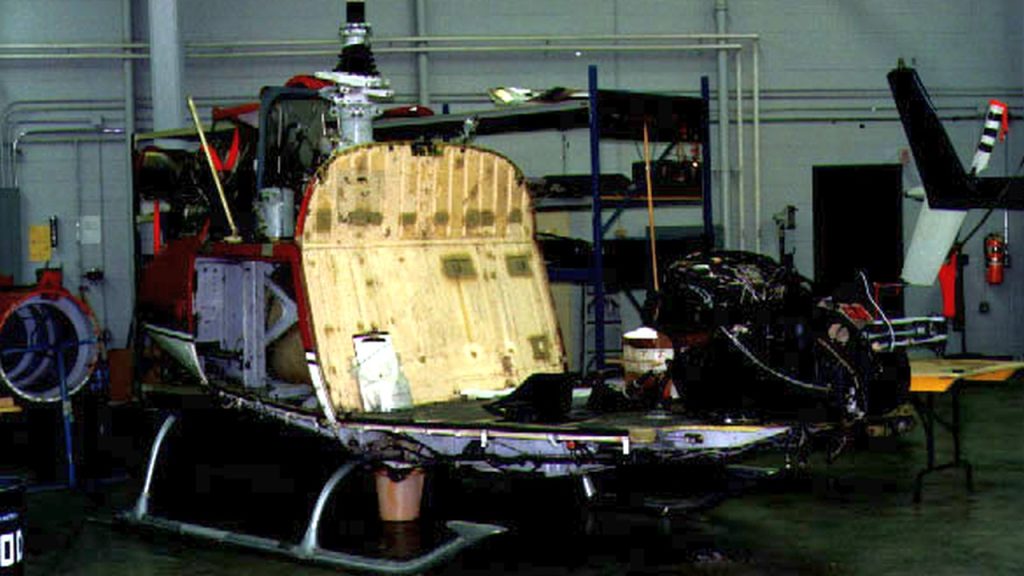
This is what your AStar 350 looks like when it goes into the hangar for major work! Yikes!