
The Canadair CL-215 (nicknamed the “Scooper”) is a twin-engine, high-wing amphibious flying boat purpose-built as a water bomber for aerial firefighting. It is one of the most iconic and effective aircraft designed specifically for combating forest fires.
I worked on these aircraft, contrary to popular use in media, we didn’t call them “Scoopers”, we called them “Ducks”!
Brief History of Development and Use
Canadair (later part of Bombardier) developed the CL-215 in the 1960s in response to Canada’s need for an effective tool against forest fires in remote, heavily wooded areas. The prototype first flew on October 23, 1967, and the aircraft entered service in 1969. Production ran from 1969 to 1990, with a total of 125 aircraft built.
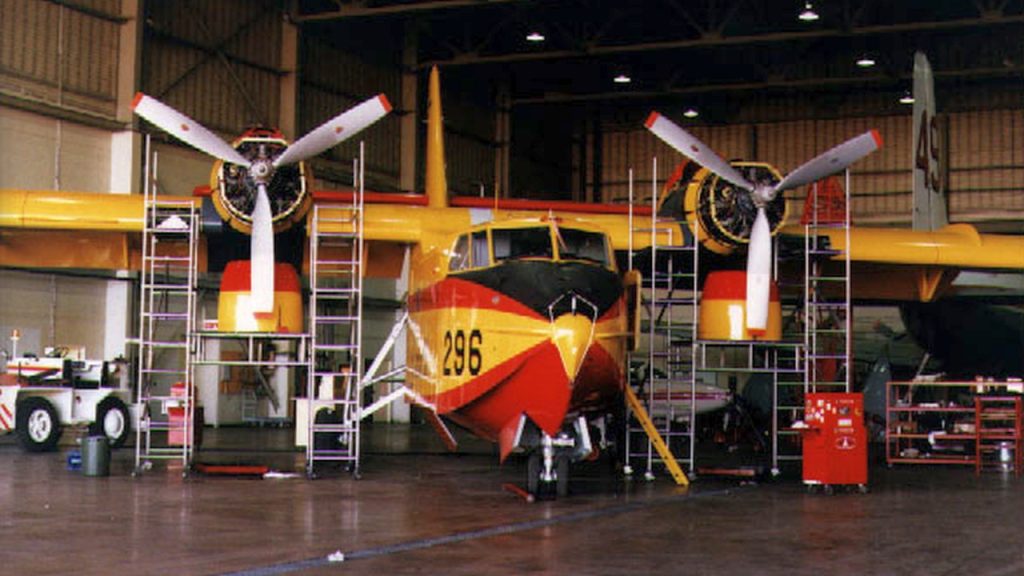
It was designed as a multi-role amphibian but excelled primarily as a water bomber. The French Sécurité Civile was the launch customer. It has seen widespread use in Canada (provincial governments), the United States, Greece, Italy, Spain, Thailand, Turkey, and elsewhere. The type evolved into the improved turbine-powered CL-215T and the further-advanced CL-415. Many original CL-215s remain in service today, often upgraded.
Common Specifications (Original CL-215)
- Crew: 2 (pilot and co-pilot).
- Capacity: Water/retardant tank: 5,450 L (1,200 imp gal / 1,440 US gal); up to 26 passengers in utility/passenger configuration or cargo/freight use.
- Dimensions: Length ~65 ft (19.82 m); wingspan 93 ft 10 in (28.6 m); height ~29.2 ft.
- Weights: Empty ~26,800 lb (12,160 kg); max takeoff ~43,500 lb (19,731 kg).
- Powerplant: Two radial piston engines (details below).
- Performance: Max speed ~216 mph (348 km/h); cruise ~160–190 mph; range ~1,300 miles (2,094 km); excellent low-speed handling and short takeoff/landing on water or land.
Firefighting Use
The CL-215 is a “Scooper” that can land on lakes or rivers, scoop up water in 12–15 seconds while skimming the surface (without stopping), then climb out and drop the load on fires. It can also use fire retardant loaded on the ground. Its amphibious design allows rapid repeated drops near water sources, making it highly efficient for initial attack and sustained firefighting in remote areas. It operates effectively in gusty conditions over fires.
Radial Engines and Turbine Conversions
- Original Radial Engines: Two Pratt & Whitney R-2800-83AM 18-cylinder air-cooled radial piston engines, each producing 2,100 hp (1,566 kW). These proven, powerful radials provided reliability for demanding low-level operations.
- Turbine Conversions: In the late 1980s, Canadair developed the CL-215T variant, replacing the radials with two Pratt & Whitney Canada PW123AF turboprops. This offered better performance (higher cruise speed, improved hot/high capability, reduced maintenance), increased weights, and modern systems. Conversions were performed on existing aircraft, and the program influenced the dedicated CL-415.
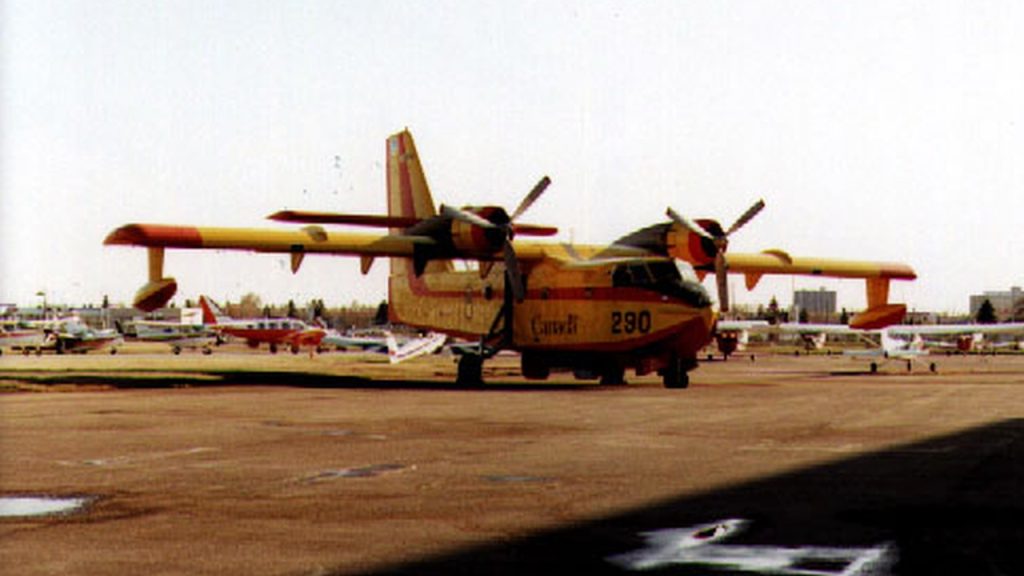
Use as an Air Tanker in CanadaThe CL-215 has been a cornerstone of Canadian provincial firefighting fleets for decades. Provinces such as Ontario, Quebec, Alberta, Saskatchewan, Manitoba, and Newfoundland & Labrador have operated them extensively. They are used for direct attack, creating firebreaks with retardant, and protecting communities and forests. Canadian operators (including government fleets and contractors like Conair and Air Spray) have deployed them across Canada and sometimes internationally. As of recent years, dozens of CL-215/CL-215T aircraft remain active in Canada.
Additional Interesting Facts
- Unique capability: One of the few aircraft that can repeatedly scoop water from natural sources, reducing turnaround time dramatically compared to land-based tankers.
- Multi-role design: Besides firefighting, it supports search and rescue, passenger transport, cargo, and utility missions.
- Legacy: The CL-215 spawned the successful CL-415 (and newer variants like the De Havilland Canadair 515), which added features like foam injection and glass cockpits.
- Tough operator: Known for rugged construction and the ability to handle harsh conditions; its distinctive appearance and water-scooping maneuvers make it a favorite in firefighting footage.
- Ongoing service: Many airframes continue flying 50+ years after introduction, with support now under De Havilland Canada / Viking.
The CL-215 is a true Canadian innovation that has saved countless forests, properties, and lives through its specialized firefighting design.