
Another ship leaving Crofton with raw logs!
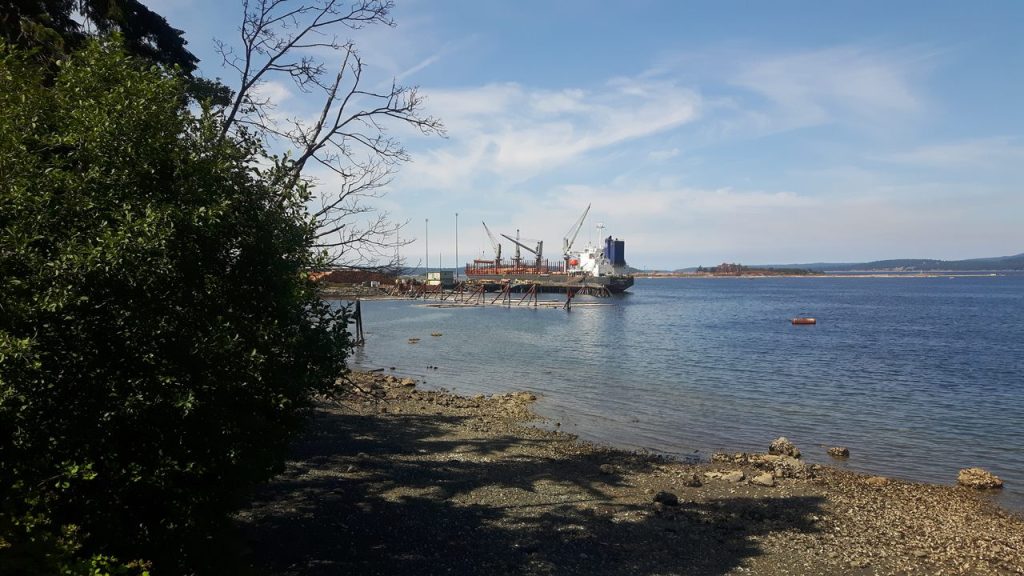
The African Jay (IMO 9737046, MMSI 311000383, callsign C6BW4) is a Handysize bulk carrier/general cargo ship built in 2015, currently (as of early July 2026) moored in Crofton, BC, on Vancouver Island.
Basic Specs
- Flag: Bahamas.
- Dimensions: Length overall (LOA) 183 m, beam ~30.6–31 m, summer draft ~10 m.
- Tonnage: Gross tonnage (GT) 23,750; deadweight tonnage (DWT) 37,705 tonnes.
- Type: Geared Handysize bulk carrier/general cargo vessel (suitable for breakbulk like logs, with cranes for self-loading/unloading in smaller ports).
- Owner: African Jay Shipping Co Ltd (Bahamas/Netherlands-linked).
- Managers: Commercial manager MUR Shipping BV (Netherlands); ISM manager Dockendale Ship Management.
It is a relatively modern, versatile smaller bulk carrier designed for coastal and regional trades, including forest products.
Current Status and Cargo (Logs)
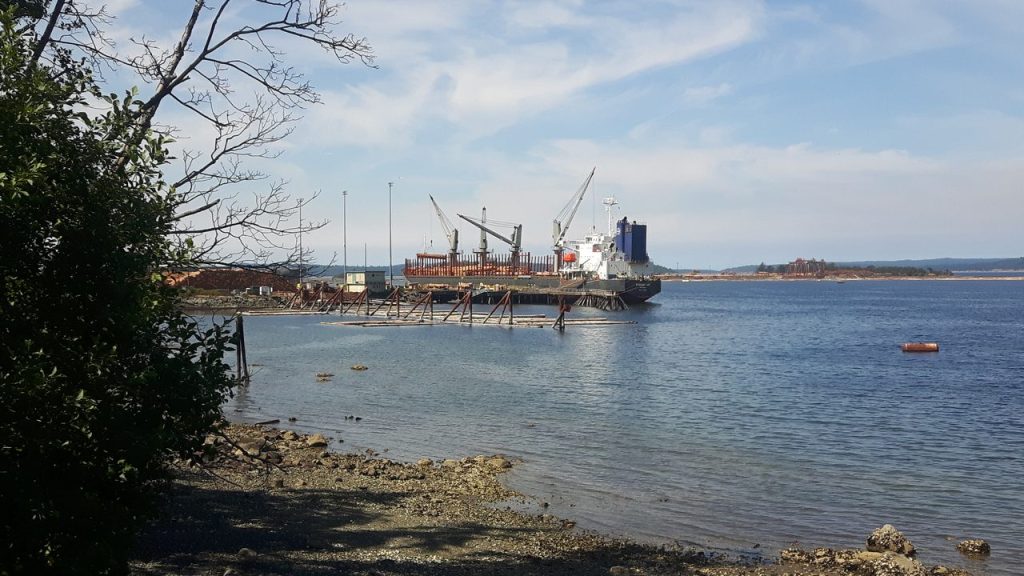
It arrived in Crofton around July 5, 2026 (after an ETA of July 1), and is moored there. Crofton is a key log export/loading terminal in BC. The ship commonly carries breakbulk logs (softwood), as seen in prior calls (e.g., Coos Bay, OR, and Eastland Port, NZ, with ~36,000+ tonnes of softwood).
It is likely (or was recently) loading logs in Crofton for export, consistent with BC’s raw log trade patterns (often to Asia, e.g., China or Japan, due to mill closures and export economics). Exact current load quantity is not publicly detailed in real-time sources, but as a near-full DWT vessel it can carry up to ~35,000–37,000+ tonnes of logs when laden (accounting for stowage and safety).
Next destination: Not explicitly confirmed in recent public data, but log carriers from BC typically head to Asian ports. Check live trackers like MarineTraffic or VesselFinder for the latest AIS updates.
Crew
Like most international bulk carriers, the crew is typically multinational (often including seafarers from the Philippines, India, Eastern Europe, etc.), with ~20–25 people on board for a ship of this size. It has operated under ITF-accepted terms in past charters. Crew review sites exist but don’t provide current specifics.
Truck Loads and Approximate Value
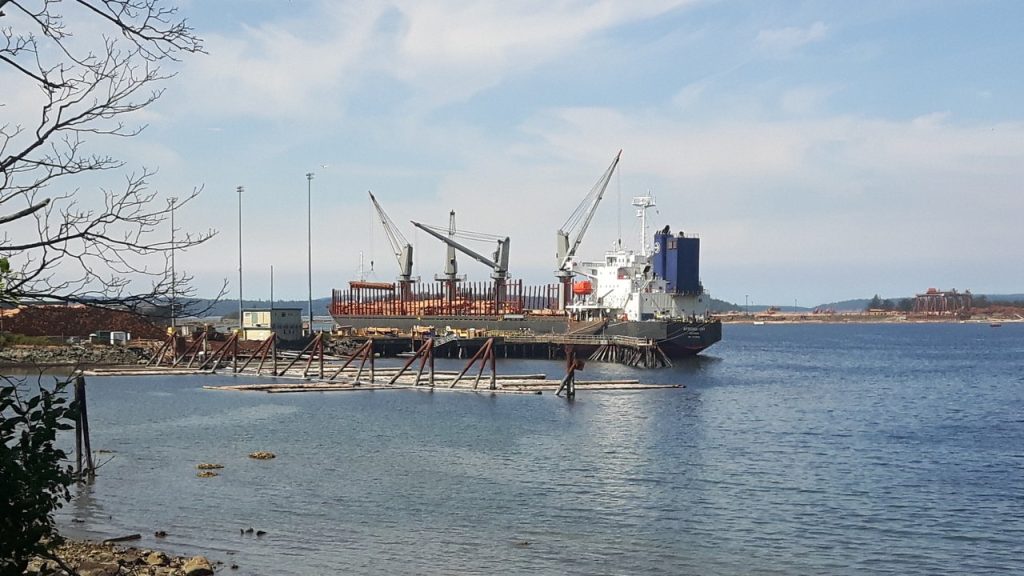
- Capacity equivalent: A full load of ~36,000–37,000 tonnes could represent roughly 1,000–2,000+ log truck loads, depending on truck size, log type/length, and regulations in BC (typical log trucks haul 30–50+ tonnes per load, but weights vary with species, moisture, and legal limits). Exact conversion requires specific load data.
- Value: Raw log values fluctuate with species (e.g., Douglas fir, hemlock, cedar), quality, and market (China demand, etc.). A rough ballpark for a full shipload of export softwood logs might be in the range of several million USD (e.g., tens to low hundreds per tonne wholesale), but this is highly variable and not a fixed figure—check current market reports for precision. BC raw log exports are a contentious topic due to local mill impacts.
Fun/Interesting Info
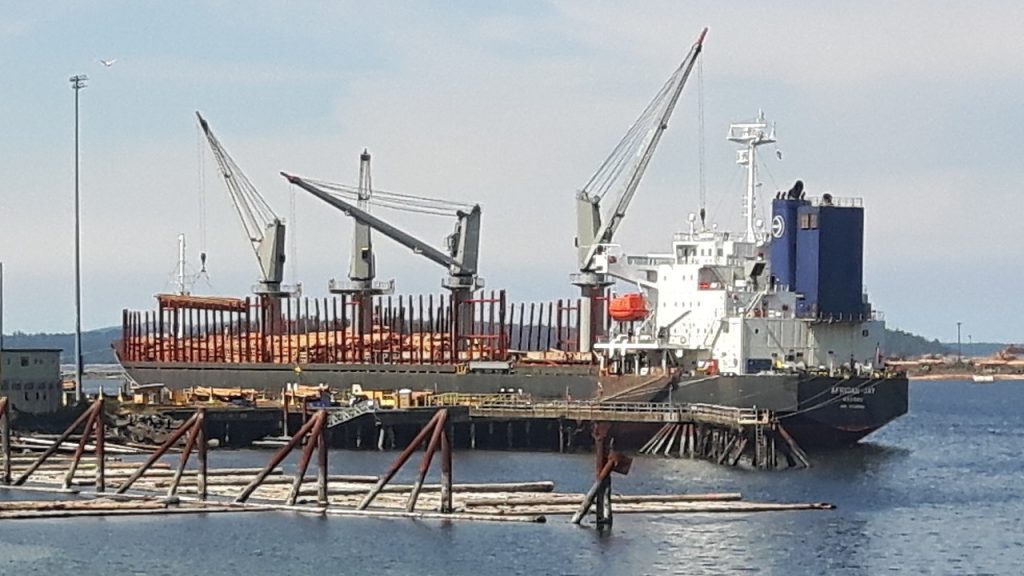
- Part of a series of “African” named vessels (e.g., African Gannet, Grouse) often in similar trades.
- It has been involved in charter disputes (e.g., a 2019 arbitration over log loading delays in Coos Bay).
- As a geared Handysize, it’s flexible for ports without heavy infrastructure—handy for log terminals.
- Ships like this highlight BC’s log export debate: large volumes leave as raw material rather than being processed locally into lumber or other products.