
The Piper Aerostar (later Piper PA-60) is a sleek, mid-wing, twin-engine piston-powered executive transport aircraft known for its high performance and speed. It was designed as a fast, efficient light twin for business and personal use.
I worked on these planes when I was with Conair Aviation!
Brief History of Development and Use
Ted R. Smith (designer of the Aero Commander) developed the Aerostar after founding Ted Smith Aircraft Company in 1963. The prototype first flew in October 1967, with certification following in 1968. Early production occurred under Ted Smith, then various owners (including Butler Aviation), before Piper Aircraft acquired the design in 1978 and continued building it as the PA-60 until 1984. A total of about 1,010 aircraft were built.
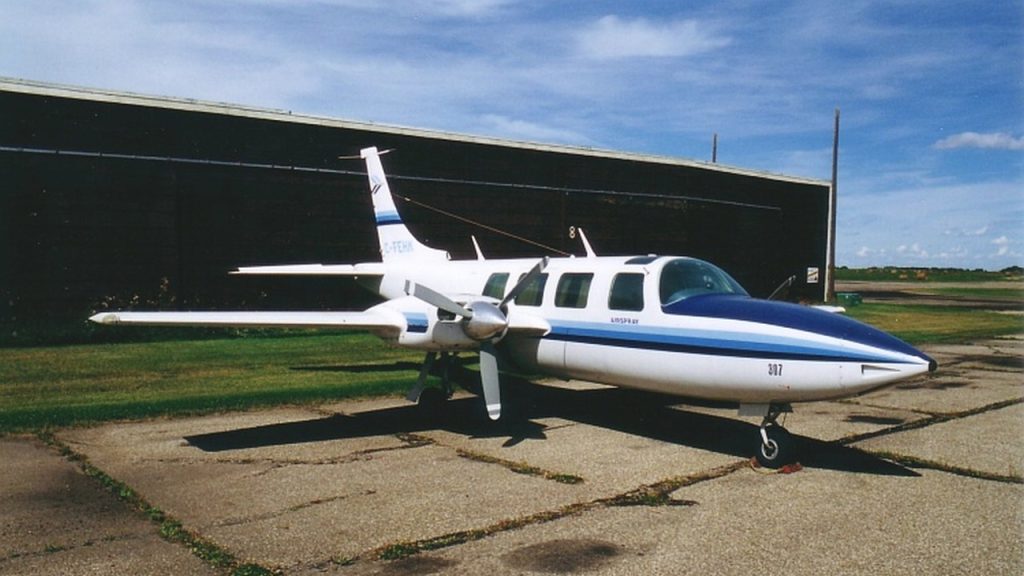
This is a random file photo from Wikipedia.
It served primarily as a high-speed executive aircraft, competing with types like the Beech Baron and Cessna 310/340. Its aerodynamic efficiency and performance made it popular with owners seeking piston-twin speed. Many remain active today, with strong owner communities and aftermarket support (including performance upgrades like the Superstar 700 conversions).
Common Specifications (Typical 601/601P or 602P)
- Crew: 1 pilot.
- Capacity: Up to 5 passengers (nominally 6 seats total, but payload often limits full occupancy with fuel and baggage); cabin is pressurized in P models.
- Dimensions: Length ~34 ft 10 in (10.6 m); wingspan ~36 ft 8 in (11.2 m); mid-wing design.
- Weights: Max takeoff ~6,000–6,315 lb (depending on model/variant); useful load varies but often limits full seating + full fuel.
- Powerplant: Twin Lycoming piston engines (details below).
- Performance: Max speed ~260–306 mph (fastest in its piston-twin class); cruise ~220–250+ mph; range ~890–1,100+ miles; service ceiling ~25,000 ft (pressurized models); good short-field capability for its type.
Engines Used
The Aerostar uses twin Lycoming six-cylinder horizontally opposed piston engines:
- Early 600 models: Normally aspirated IO-540 (290 hp each).
- 601 series: Turbocharged TIO-540 variants.
- Later 602P/700P and conversions: Higher-output versions (up to 350 hp each) with turbocharging and intercoolers for better high-altitude performance.
They drive constant-speed, feathering propellers. The engines provide strong climb performance and speed but require careful management of turbo systems in earlier models. No widespread turboprop conversions were developed for the type.
Firefighting Use by Conair Aviation
The Piper Aerostar was not used as an air tanker (retardant bomber) but as a “bird dog” or air attack/spotter aircraft by Conair Aviation (now Conair Group) in Canada.
In this role, the aircraft carries a pilot and an Air Attack Officer who coordinates tanker drops, directs ground firefighters, assesses fire behavior, and manages the airspace over wildfires. Its speed, good visibility, and twin-engine reliability made it suitable for leading slower tankers (e.g., Convair 580s or Electras) during operations. Conair operated several Aerostars in this capacity, particularly in the 1980s–1990s/early 2000s, before transitioning to types like the Aero Commander 690 and Cessna Caravan.
Additional Interesting Facts
- Speed king: Often called the fastest piston twin in its class, with excellent aerodynamics (mid-wing, sleek profile, and attention to drag reduction).
- Owner modifications: Popular aftermarket upgrades include engine power increases (e.g., Machen Superstar 700 conversions with higher gross weights and performance).
- Handling reputation: Responsive and fast but demands proficient piloting due to higher wing loading and relatively unforgiving stall characteristics compared to some lighter twins.
- Legacy: A classic “hot” piston twin that bridged the gap between light GA twins and light jets; still admired for its looks and performance today.
- Notable: Ted Smith aimed for a high-performance design that was efficient and capable, resulting in an aircraft that remains distinctive on ramps decades later.
The Aerostar exemplifies Ted Smith’s vision for a high-speed, sophisticated piston twin and found a unique niche supporting aerial firefighting in Canada through Conair’s bird dog operations.
Have fun with your aviation career or hobby!