
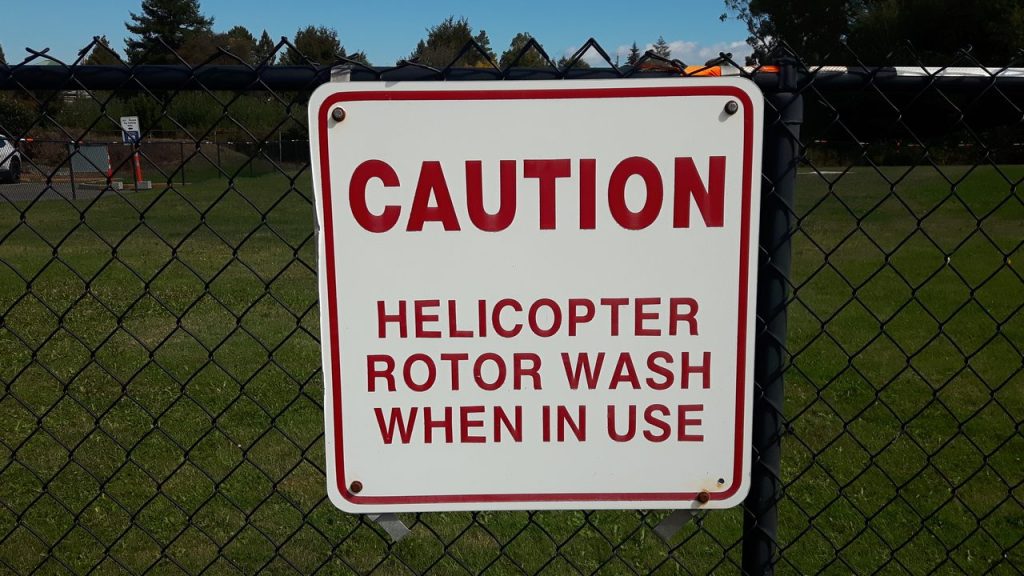
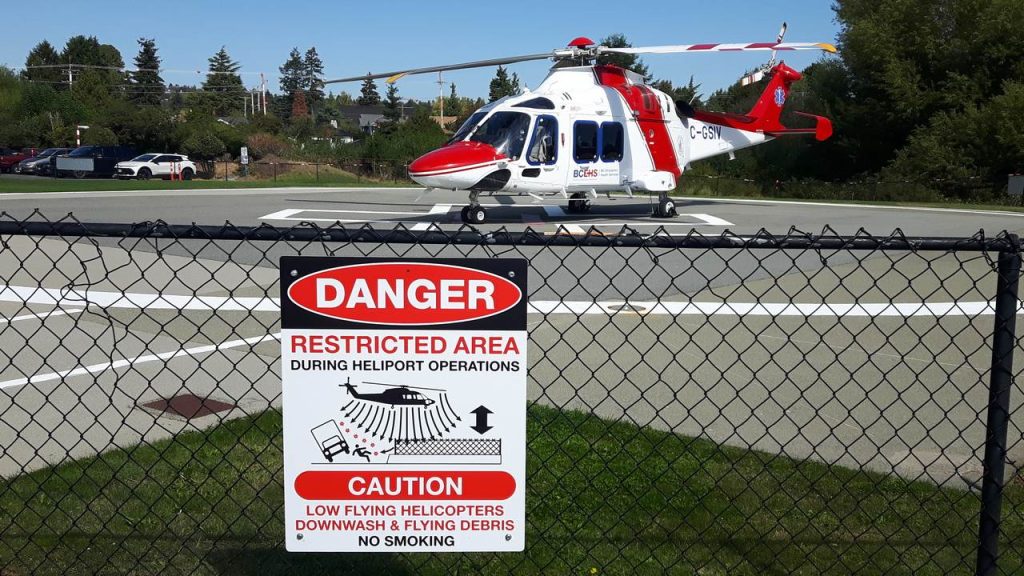
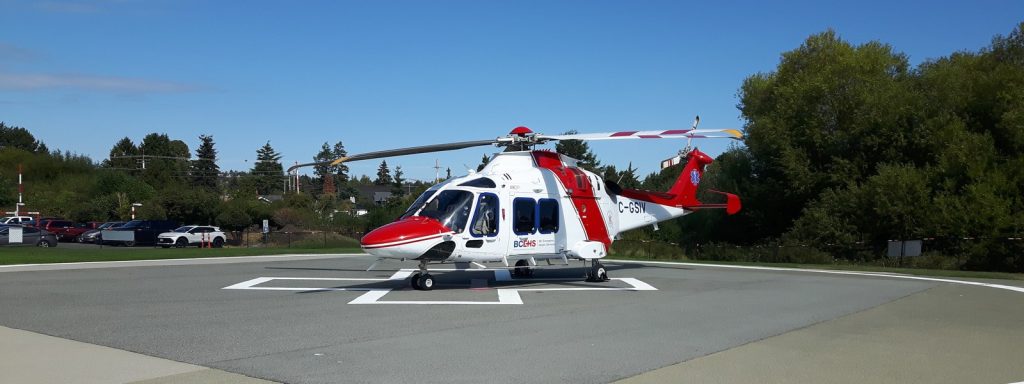
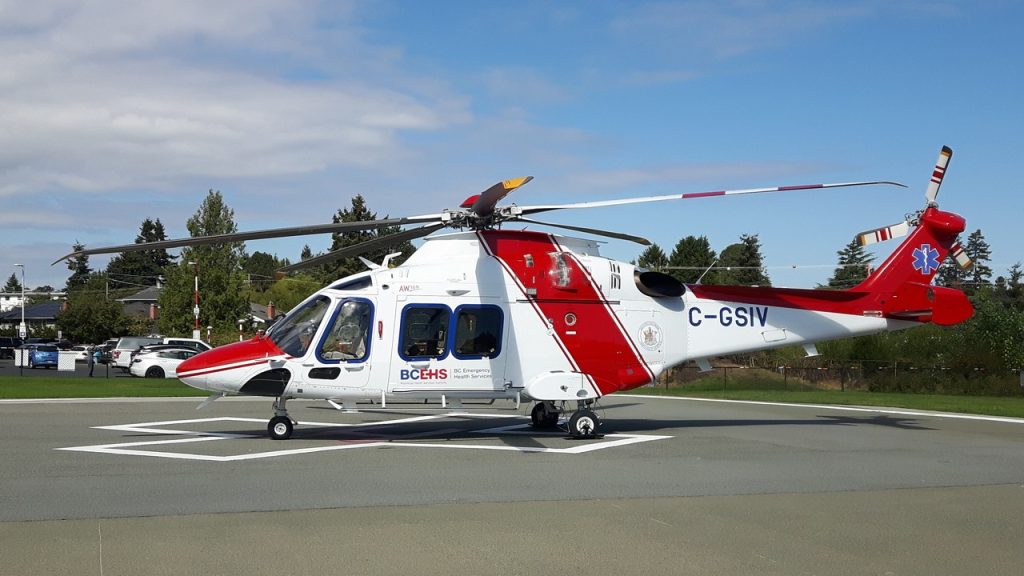
During a recent trip to Victoria, BC, I went around the back of the Royal Jubilee Hospital and checked out the Medical Helipad and got my first chance to ever see a Leonardo, AW169 Medevac Helo.
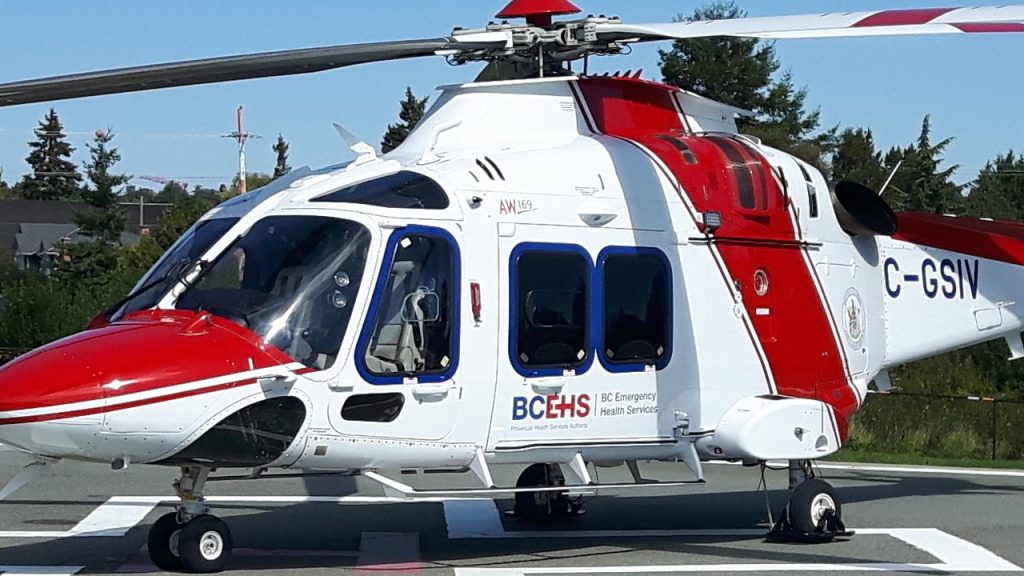
British Columbia Emergency Health Services (BCEHS) operates a fleet of seven Leonardo AW169 medium-twin helicopters for helicopter emergency medical services (HEMS)/air ambulance missions.
These are operated by Ascent Helicopters (the primary contractor under a roughly 10-year, $544–544.5 million contract awarded around 2023), with Babcock Canada as a key subcontractor handling aspects like maintenance and support. The aircraft are leased from lessor LCI (via a joint venture). They represent the first AW169s in Canada and replaced a mixed fleet of older types (including Sikorsky S-76s, Bell 412s, and MD 902s) previously used by multiple operators.

Operations and Bases
- The seven aircraft (registrations include C-GSHB, C-GSHY, C-GSIO, and others) were delivered between fall 2024 and summer 2025. Medical interiors were completed by HeliMods in Vancouver/British Columbia.
- They fly from five bases: Parksville (or Qualicum Beach area on Vancouver Island), Vancouver (two aircraft plus a spare), Kamloops, Prince George, and Prince Rupert.
- Vancouver and Prince Rupert generally operate 24/7; the others typically provide 12-hour service. Southern bases tend to be busier than northern ones.
- First operational medical mission (and first AW169 HEMS flight in Canada) occurred in early March 2025. Full operations ramped up through 2025. BCEHS overall handles medical emergency evacuations and inter-facility patient transfers for over 7,800 patients annually (helicopters and fixed-wing combined).
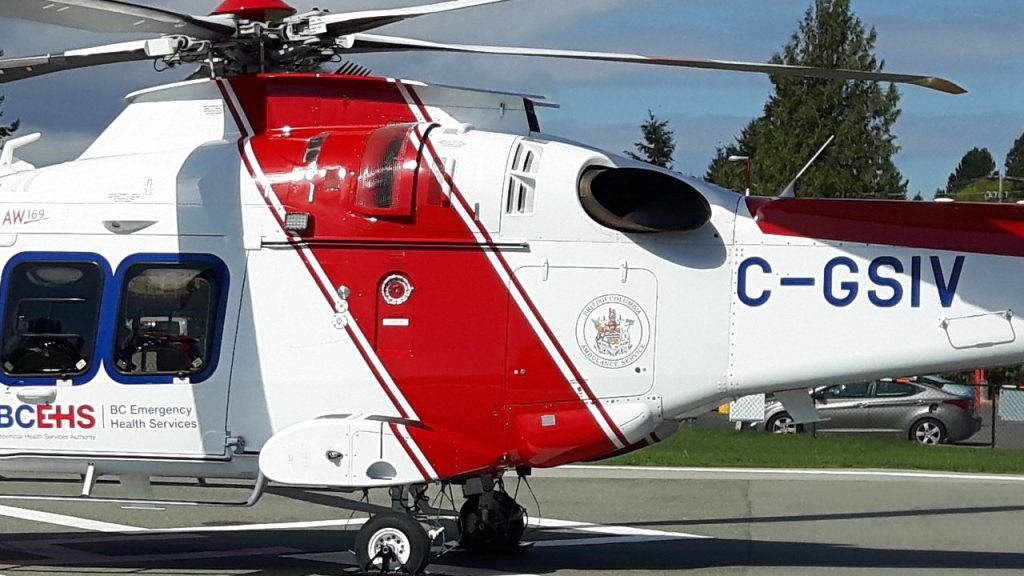
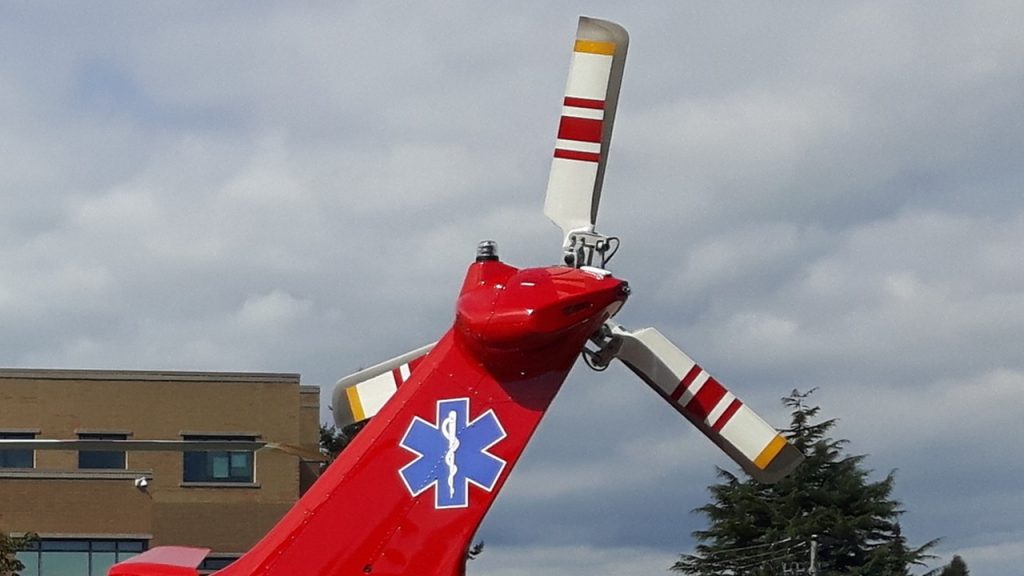
Key Features for EMS Use
The AW169 is a modern light-intermediate twin-engine helicopter (Pratt & Whitney Canada PW210 series engines with FADEC), designed with patient care in mind. Relevant strengths for BCEHS include:
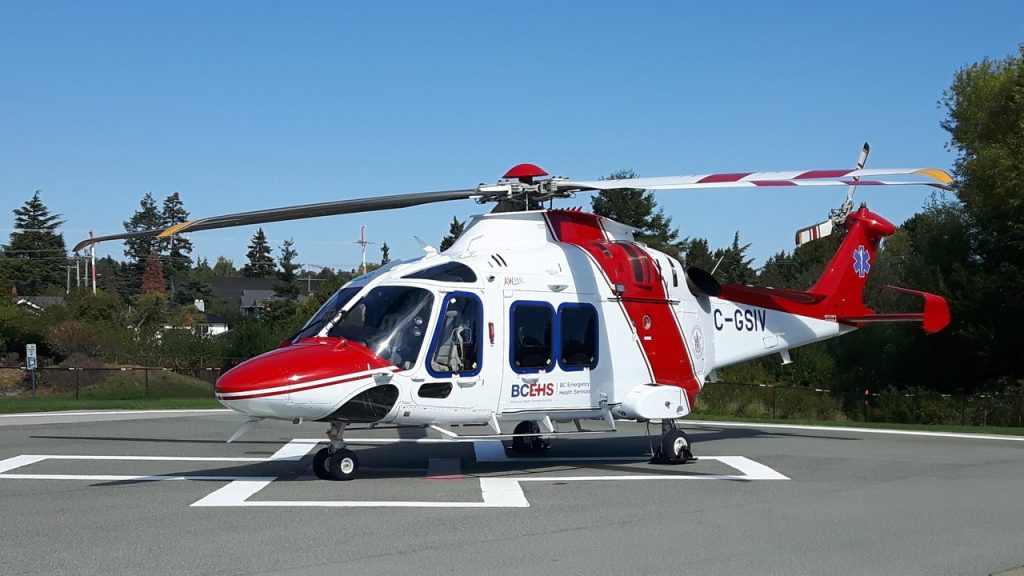
- Spacious, flexible “boxy” cabin with large sliding doors, flat floor, and good access for medical crews (suitable for 2–3 paramedics + patient; supports critical care equipment).
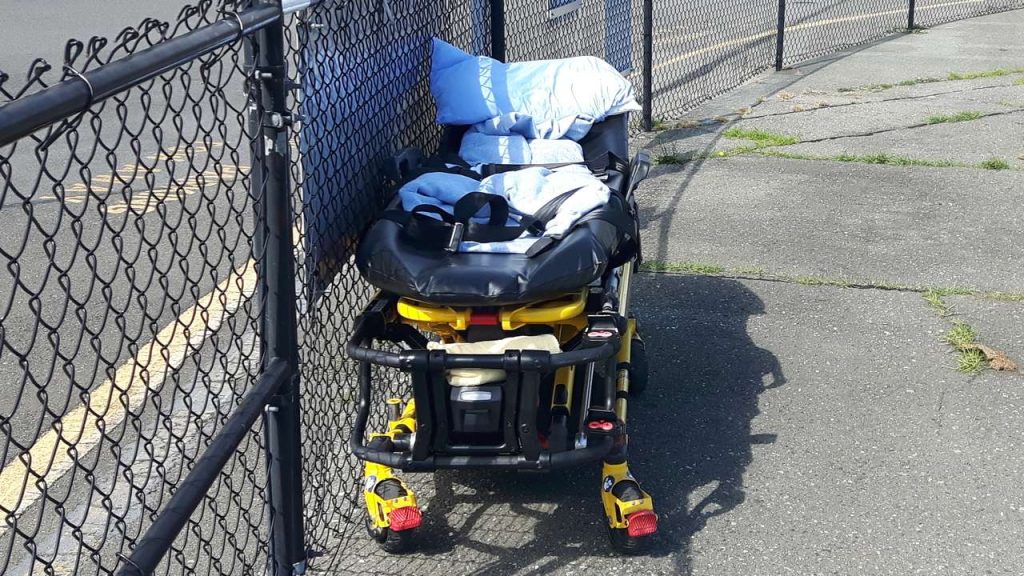
- Self-loading/power stretcher system (up to ~700 lb / 318 kg capacity) that reduces manual lifting and is compatible with hospital/ground ambulance systems.
- Night-vision goggle (NVG) capability, advanced glass cockpit (single-pilot IFR capable, though often flown dual-pilot), synthetic vision, terrain awareness, and other safety systems.
- Strong performance (cruise speeds around 140+ knots depending on configuration, good hot/high and single-engine capability), plus features like APU mode (allows systems to stay powered with rotors stopped for quick restarts and ground operations).
- Overall improvements in speed, range, cabin ergonomics, and reliability compared to the prior mixed fleet, helping reach critical care facilities faster (e.g., better coverage for central/southern Vancouver Island).
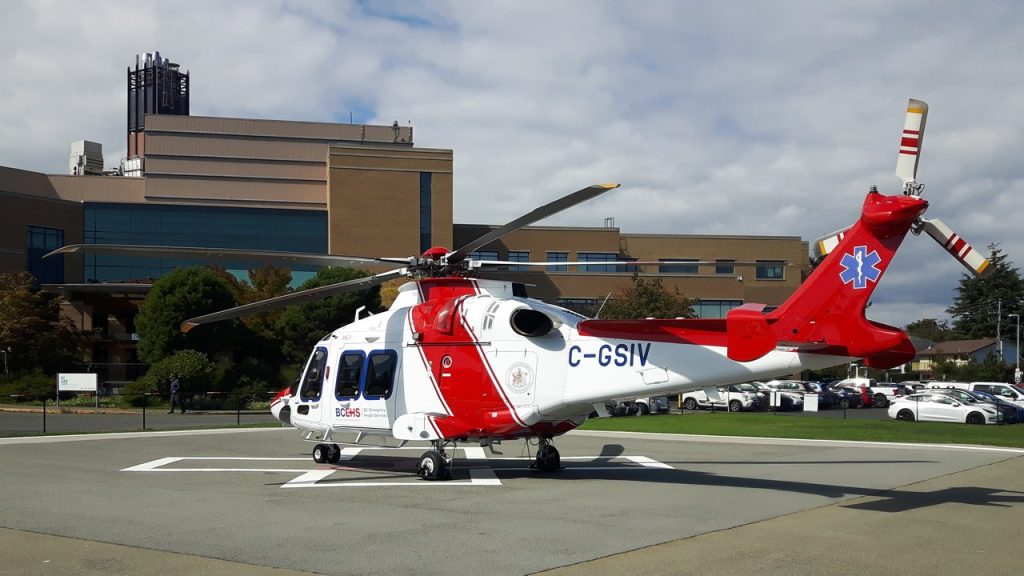
In short, these AW169s form a standardized, next-generation HEMS fleet tailored for BC’s large and varied geography, focusing on safer, more efficient critical care transport. They have been well-received by the operator for cabin design, performance, and operational suitability.